What Supercropping Really Is in Cannabis
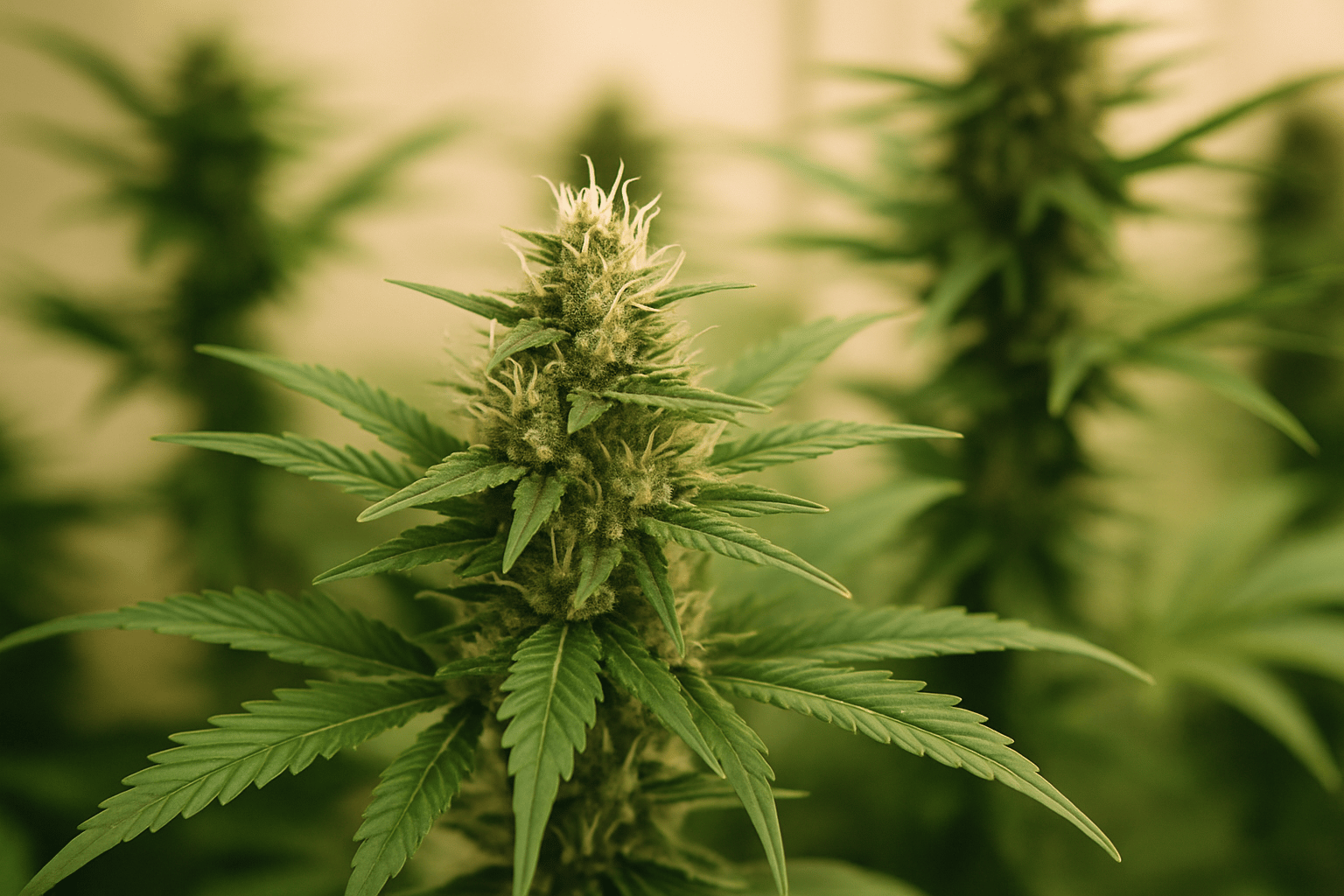
Supercropping is a high-stress training technique in which shoots are deliberately softened by pinching and then bent, without fully cutting through the outer skin. The goal is not to injure the plant, but to change its growth direction and reorganize how it distributes energy. In practice, this creates a flatter, more even canopy that uses light more efficiently and brings more bud sites to a similar level.
In our experience, supercropping is often misunderstood. Many growers equate it with rough snapping or think it is only an emergency measure for plants that have grown too tall. In reality, it is a highly targeted tool for canopy management. If you hit the right timing and work cleanly, cannabis responds with surprising resilience: the treated area forms a thickened “knuckle,” a kind of healing callus that can later make the branch even stronger.
Supercropping is especially useful for vigorous, stretch-prone cultivars, in tight indoor setups, or when individual tops rise above the rest of the canopy. Anyone who wants to read the plant better should also understand the anatomy of the cannabis plant. Then it quickly becomes clear why apical dominance, hormone distribution, and light access are so critical in training.
Why Supercropping Can Improve Yield
The biggest advantage lies in better distribution of light and plant energy. An untreated cannabis plant concentrates much of its growth in the main top. This apical dominance causes upper shoots to be supplied preferentially, while lower side branches lag behind. Supercropping temporarily slows this priority. The plant responds by directing more energy into neighboring shoots and secondary tops.
In our grows, the effect is especially clear under LED lighting with limited penetration depth. When the canopy is uneven, the upper 10 to 20 centimeters receive too much light while the lower areas receive too little. Supercropping brings dominant shoots down to the height of the rest of the plant. The result is often more evenly developed colas instead of one large main flower and many small side buds.
Another point is airflow. A well-shaped, open plant dries faster after watering or after periods of high humidity. This is especially important in late flower, when dense buds become more susceptible to mold. Anyone growing in a protected outdoor area or under glass should also read our article on growing cannabis in a greenhouse, because the combination of plant shape, climate, and air exchange plays an especially important role there.
The Right Time for Supercropping
The best time is almost always during the vegetative phase or very early in the flowering stretch. Ideal plants are healthy, have strong turgor, active growth, and sufficient leaf mass. In practice, supercropping usually works well from the 4th to 6th node level, when the shoots have enough substance but are not yet woody. For indoor photoperiod plants, the last week before switching to 12/12 or the first 10 to 14 days after the flip is often ideal.
Much later in flower, the risk increases significantly. By then, stems are stiffer, healing takes longer, and the plant invests less in regeneration. In addition, already formed flower sites can become unfavorably compressed or damaged by rough bending. For outdoor plants, timing depends heavily on the weather: we never supercrop before a heat wave, a prolonged rainy period, or strong winds.
Autoflowering plants are a special case. The window is short, and mistakes directly cost yield because the plant has no long recovery phase. In our experience, supercropping autos is only worthwhile for very experienced growers and only on extremely vigorous specimens. For most growers, gentle low-stress training is the safer choice. You can also learn more about growth dynamics in the growth stages of cannabis.
How to Perform Supercropping Cleanly and with Control
Before the procedure, the plant should be neither dry nor overwatered. A well-hydrated but not limp shoot is the easiest to work with cleanly. We prefer to work 1 to 3 hours after watering, when the plant is standing firm. The room should be around 22 to 26 °C, with moderate humidity of about 55 to 65 percent in veg. Cold, brittle stems break more easily.
First, choose the shoot that is growing too tall or disrupting canopy balance. Then select a spot a few centimeters below the tip, usually between two nodes. Using your thumb and forefinger, gently roll and squeeze the stem until the inner tissue softens. You can usually feel very clearly when the fibers give way. Only then should the shoot be slowly bent in the desired direction. Do not jerk, twist, or force it.
If everything goes correctly, the outer skin remains largely intact and the branch droops in a controlled way. It should not dangle loosely, but be positioned in a clean curve. We often secure strongly tensioned shoots with soft plant ties, garden tape, or a support stake. After 24 to 72 hours, the tip usually begins to turn back toward the light. That is exactly what you want: the growth direction has been changed without the shoot losing its function.
Step by Step in Practice
- Select only healthy, actively growing plants.
- Identify dominant shoots that rise above the canopy.
- Choose a soft spot between two nodes.
- Gently pinch and roll the stem with your thumb and forefinger for 5 to 10 seconds.
- Slowly bend the shoot to about 45 to 90 degrees, depending on your goal.
- Secure it with soft tape if needed.
- Leave the plant alone for 2 to 5 days and observe it closely.
Which Shoots Are Suitable and Which Are Better Left Alone
Vigorous main and side shoots of medium thickness are best suited. Very thin shoots have little effect because they bend easily anyway. Very thick, already heavily woody branches are riskier because they are more likely to split. On bushy plants, we prefer to supercrop the 2 to 6 most dominant tops rather than intervening randomly everywhere. Less, but targeted, is almost always the better strategy.
You should not supercrop weakened plants, freshly repotted specimens, plants under pest pressure, plants with nutrient problems, or those showing clear calcium or boron deficiency. These two deficiencies in particular make cell walls unstable and impair healing. If stems split easily or new growth appears deformed, the cause must be corrected first. Related reading includes our articles on calcium deficiency in cannabis plants and proper nutrient management in the article fertilizing cannabis.
We also treat mother plants or valuable keeper genetics more cautiously than ordinary production plants. With rare cuts, the rule is: test first on a less important shoot. Not every genetic line reacts the same way. Some indica-leaning plants remain compact and predictable after the procedure, while strongly sativa-dominant lines can push aggressively upward again within just a few days.
Supercropping, Topping, LST, and Defoliation Compared
Supercropping is not a replacement for all other training methods, but one component within the overall system. Topping removes the tip completely and forces the main growth to split. LST works by gently tying shoots down without injuring tissue. Defoliation improves light and airflow inside the plant. In practice, experienced growers often combine these methods, but not at the same time and never without a plan.
We have seen good results with the following sequence: first topping or FIM in early veg, then LST for horizontal spread, and later targeted supercropping of individual outliers during stretch. If you also defoliate, do it in moderation. Too much stress at once slows metabolism and costs growth days. More on that in the article defoliating cannabis.
| Method | Stress Level | Goal | Best Time |
|---|---|---|---|
| Supercropping | Medium to high | Control height, level the canopy | Late veg to early stretch |
| Topping | Medium | Break apical dominance, create more main shoots | Early to mid veg |
| LST | Low | Flat, wide plant shape | From early growth through stretch |
| Defoliation | Low to medium | Improve light and airflow inside | Targeted in veg and early flower |
Aftercare Following Supercropping: Healing, Climate, and Nutrient Management
After the procedure, the plant does not need special treatment, but it does need stable conditions. For the next 48 hours, we avoid anything that creates additional stress: no heavy defoliation, no repotting, no drastic EC increase. We see good results at 22 to 27 °C, with sufficient air movement but no direct blast on the injured area, and humidity of about 50 to 60 percent. Air that is too dry can increase transpiration stress, while air that is too humid impairs wound healing.
When watering, the rule is consistency, not overdoing it. A common mistake is trying to “pamper” the plant after training and keeping the substrate too wet. Especially after stress, the root zone needs oxygen. Clean work here prevents follow-up problems. Our guide on watering cannabis correctly fits well here. In terms of nutrition, a balanced standard feeding program is enough. Excessive boosters or silicon shocks immediately after the procedure rarely provide a measurable benefit.
If a shoot is slightly torn, you can splint it with plant tape, grafting tape, or, if necessary, clean tape. As long as some tissue connection remains, cannabis often heals surprisingly well. In our experience, such repairs should be checked after 7 to 14 days. If a strong healing callus has formed and the shoot is carrying tension again, the support can usually be removed.
Typical Supercropping Mistakes and How to Avoid Them
The most common mistake is using too much force in the wrong place. Anyone who forces a hard, woody section downward with direct pressure is more likely to create an open break than a controlled bend. Working too hastily is just as problematic. Supercropping is a technique where feel matters more than strength. If you are unsure on your first shoot, practice on less important side branches.
Another classic mistake is poor timing. Weakened plants, heat stress, nutrient excess, pest infestation, or the period shortly before the end of flowering are poor conditions. This technique does not turn a weak plant into a strong one. It works well when the plant is already in top condition. Many problems later blamed on supercropping were actually present beforehand.
We also often see growers treat too many shoots in one day. That can work if the plant is large, vigorous, and growing in a perfect climate. In smaller home grows, it is usually better to correct only the truly dominant tops per session and then observe for 3 to 5 days. Anyone who regularly does too much at once quickly ends up with growth stalls, uneven recovery, or an unnecessarily chaotic plant structure.
Supercropping in Indoor, Greenhouse, and Outdoor Cultivation
Indoors, supercropping is especially valuable because height is limited and the light comes from above. Under high-intensity LEDs, it helps create an even distance to the lamp. That reduces bleaching at the tops and improves use of the entire light footprint. In tents with 160 to 200 centimeters of height, this is often the difference between a controlled canopy and a late-stage space problem.
In the greenhouse, the technique also works very well, especially during strong summer stretch. But there is one factor many people underestimate: sunlight moves differently than artificial light, and the plant responds more dynamically to the course of the day and temperature peaks. Supercropping helps there not only with height, but also with keeping the plant more open and wind-permeable. That is a real advantage against trapped moisture and botrytis risk.
Outdoors in open beds or large pots, supercropping is more of a shaping tool than a pure height-control measure. It is especially worthwhile where visual screening is needed, where wind exposure is high, or when individual branches become too dominant. However, aftercare is more difficult outdoors because weather changes cannot be controlled. We always postpone such interventions before forecast heavy rain or storms. Anyone wanting to learn more about mold prevention will find practical guidance in the article botrytis in cannabis.
Which Genetics and Which Type of Grower Benefit Most from Supercropping
The biggest benefits come with vigorous photoperiod cultivars that stretch strongly, have long internodes, and produce active side branching. Many Haze, Diesel, Cookies, or modern hybrid lines respond very well when structured early. Compact plants that are already naturally squat often need supercropping less, unless individual tops shoot upward unevenly.
With clones, the technique is especially interesting because they grow more uniformly genetically, making canopy planning easier. If you work with stable, healthy starting genetics, response and healing are usually more predictable than with highly heterogeneous seed plants. If you are looking for a strong foundation, LeafConnect offers suitable THC clones as well as THC seeds for different training styles.
For absolute beginners, supercropping is not the first technique we would recommend. Anyone still struggling with climate, watering, light distance, or nutrient management should first master those basics consistently. Then supercropping becomes a precise tool instead of an additional source of mistakes. Experienced growers, on the other hand, can use it very deliberately to influence plant shape, light use, and yield potential.
Sources
- Jorge Cervantes – “Marijuana Horticulture: The Indoor/Outdoor Medical Grower’s Bible”, 2006
- Ed Rosenthal – “Marijuana Grower’s Handbook”, 2010
- Bruce Bugbee – “Cannabis Physiology and Production Practices”, 2021
- Royal Queen Seeds Editorial Team – “Super Cropping Cannabis Plants”, 2023

About the Author – Ben
Ben has been intensively involved in the cultivation and care of cuttings and the healthy development of plants during the growth phase for several years. His focus lies on low-stress training methods, stable growth conditions, and avoiding common care mistakes. The content is based on practical experience, proven methods, and real observations from daily work with young plants.
Expert contribution & updates: Hannah – Research, contextualization of current methods and observation of new developments.
This article was created with AI support and editorially reviewed.
More about the team behind LeafConnect