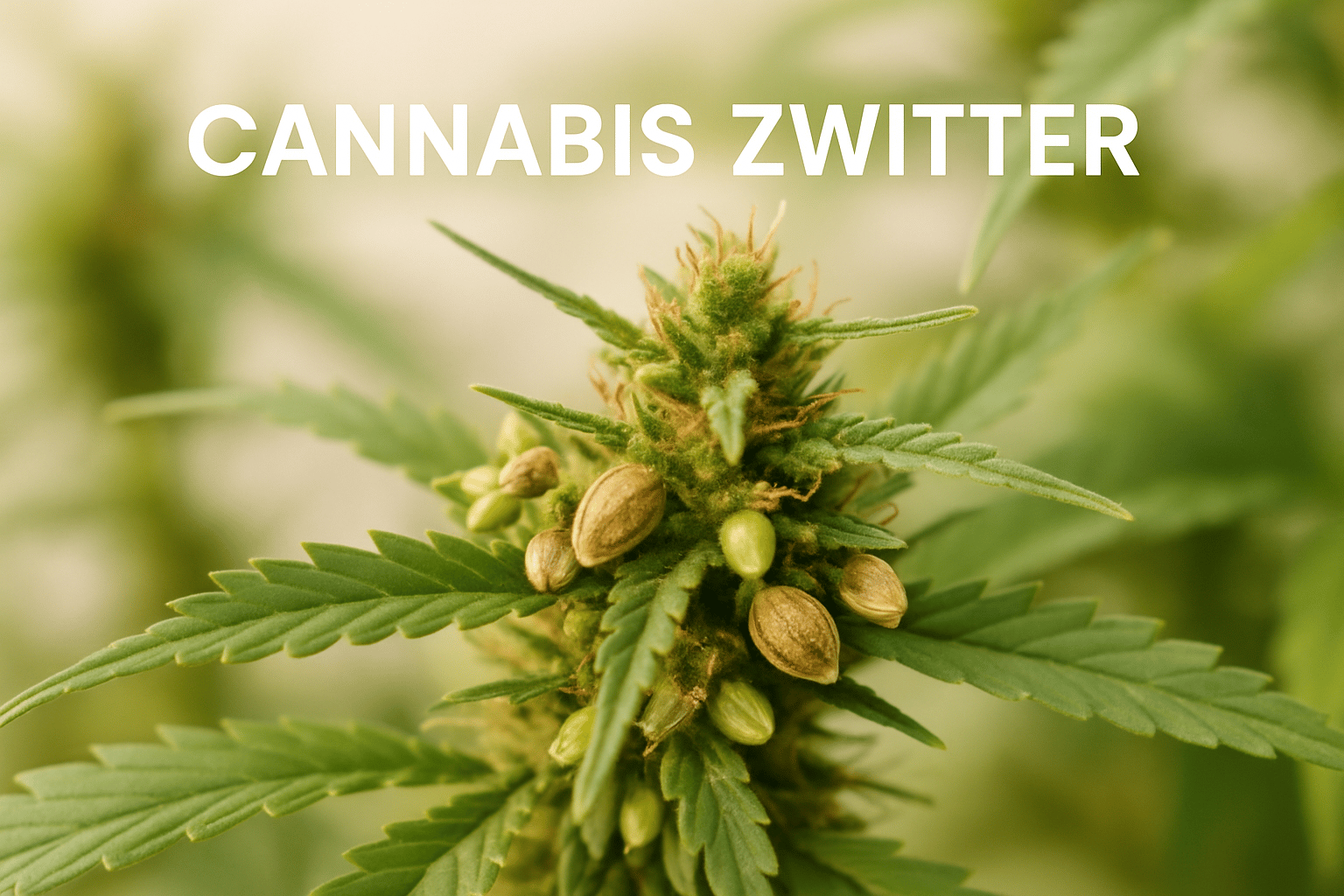
What does “cannabis hermaphrodite” actually mean?
Hermaphrodites are cannabis plants that develop both female and male sexual characteristics at the same time. In practice, that means additional male flower sites or individual stamens appear on a plant that otherwise looks female. That is exactly what makes the issue so sensitive, because many growers notice the change only late, when the plant is already well into flowering.
From a horticultural perspective, two things must be clearly separated. First, there are plants with a genetic tendency toward intersex traits. Second, there are plants that turn hermaphrodite under stress, even though their genetics may basically be stable. In our experience, this distinction is crucial because it determines whether you mainly need to work on your environmental control or whether the source material is the real problem.
A common mistake is to assume every unusual structure is immediately a hermaphrodite trait. Beginners in particular often confuse swollen calyxes, new flower sites, or foxtailing with male organs. Anyone who knows the anatomy of the cannabis plant well will recognize the difference much faster. That saves unnecessary intervention and prevents healthy plants from being removed out of uncertainty.
How to identify a hermaphrodite reliably
The safest method is regular visual inspection at the nodes and in both the lower and upper flower zones. Female pre-flowers typically show a small calyx from which fine white hairs emerge. Male parts, by contrast, look more like small round balls or banana-shaped structures. These “bananas” are actually exposed stamens and can push directly out of the flowers.
Individual stamens deep inside the flower structure are especially tricky. They are often not openly visible on the side branches, but hidden between dense plant tissue. That is why a quick glance from above is not enough. We have had good results checking plants every 2 to 3 days during mid to late flowering with a small inspection lamp or under neutral working light. Warm, heavily color-shifted light makes assessment much more difficult.
Another point: not every plant shows hermaphrodite traits evenly. Some develop male flowers only at individual stress points, for example in lower, poorly ventilated areas or directly on shoots that were heavily bent, broken, or repeatedly disturbed. That is why inspection should always be systematic: top, middle, bottom; main shoots and side shoots; inner canopy and outer canopy.
| Trait | Female flower | Male part / hermaphrodite trait |
|---|---|---|
| Shape | Teardrop-shaped calyx | Round ball or banana-shaped stamen |
| Hairs | White stigmas often visible | No stigmas |
| Position | At nodes and in flower clusters | At nodes, in flowers, often hidden inside |
| Development | Continuous flower formation | Sudden appearance of individual “nanners” or pollen sacs |
The most common causes of hermaphrodite formation
The most common trigger in indoor grows is light stress. Even small light leaks during the dark period can throw sensitive plants off balance. This includes LEDs on devices, leaky tents, opening the tent during the night cycle, or streetlight coming through a window. This is especially critical in the first 3 weeks after switching to flowering, but repeated disturbance can also cause problems later on. If you want to check your setup, it is also worth reading our article on cannabis lighting, because it helps put the technical side of light management and common sources of error into context.
The second major factor is general plant stress. This includes strong temperature fluctuations, root problems, over- or under-watering, salt stress from excessively high nutrient concentrations, and mechanical injury. In our experience, many problems are not caused by one dramatic mistake, but by the sum of several smaller stressors. A plant may tolerate 29 to 30 °C for a short time, irregular watering, and high EC values—but the combination over several days significantly increases the risk.
Genetic instability also plays a role. Some lines react more sensitively to stress or show intersex tendencies more often. This is especially relevant with poorly selected source material. Anyone working with clones should therefore pay attention not only to growth and vigor, but also to the reliability of the mother plant. With seeds, proper selection beforehand is just as important, because otherwise genetic weaknesses may only become visible halfway through the run.
Stress factors in detail: where growers unknowingly create problems
One classic mistake is irregular watering. If the substrate repeatedly dries out completely and is then heavily soaked, root pressure, nutrient uptake, and metabolism fall out of balance. In soil especially, you often see a chain of symptoms: drooping leaves, slowed growth, nutrient lockout, and later increased sensitivity during flowering. Our impression from many grows: growers who manage irrigation properly not only reduce deficiency symptoms, but often also indirectly lower the risk of hermaphroditism. Our guide how to water cannabis properly fits well here.
Overfertilization is similarly problematic. EC values that are too high or a nutrient solution that stays too “hot” for too long create salt stress, which becomes visible especially quickly in coco, rockwool, and heavily pre-fertilized substrates. Burnt leaf tips alone are not yet proof of a serious problem, but they do show that the plant is operating at its limit. If heat or light stress is added on top, the burden increases further. Anyone who wants to dive deeper into nutrient management will find a solid foundation in the article fertilizing cannabis.
An often underestimated issue is excessive training stress in early flowering. Heavy defoliation, late topping, aggressive bending, or repeated pruning after the flowering switch can throw sensitive cultivars out of rhythm. Training is useful, but timing is critical. In our practice, it has proven effective to complete major interventions before the flowering switch and make only moderate corrections during bloom.
When the risk is especially high
The most sensitive phase begins shortly before sex expression and continues through the first weeks of flowering. In this window, the plant reacts especially strongly to disturbances in the photoperiod rhythm. If a grow is unstable during this time, the consequences often only become visible a bit later. Many growers are then surprised in week 5 or 6, even though the actual cause was already set much earlier.
A second risk window occurs toward the end of flowering, when plants are under strong ripening stress. Some genetics then push out individual stamens in response to aging or stress. This is not always a sign of completely unstable genetics, but it does show that the plant is operating at its stress limit. We often see this with excessive heat, prolonged drought, root stress, or when plants remain in the room well beyond their optimal harvest window.
Outdoors and in greenhouses, the environment adds another layer. Heat spikes, cold nights, persistent rain, damaged shoots from wind, or uneven light conditions can promote intersex reactions. Anyone growing under glass should pay especially close attention to air exchange, temperature spikes, and light shading. Our article growing cannabis in a greenhouse: climate, protection, and strong yields under controlled conditions is a useful companion here.
What should you do if you discover hermaphrodite traits?
The right response depends on how severely the plant is affected. If you find only a single, clearly isolated stamen, you can carefully remove it with clean tools or tweezers. Ideally, ventilation should be briefly reduced during the process so nothing is spread unnecessarily. Then continue monitoring the plant very closely over the following days. However, this only makes sense if the structures are truly isolated.
If the plant shows male parts in multiple places or repeatedly forms new stamens, the situation is much more serious. Then you need to weigh whether isolation is possible or whether the plant should be removed from the crop. In our experience, hoping for too long often costs more than making an early, clear decision. Anyone trying to “push through” with a clearly unstable plant usually risks extra work and disruption throughout the entire room.
It is also important not to panic and start cutting blindly on the plant. Hectic intervention, heavy defoliation, or renewed training usually makes the stress worse. A better approach is a sober one: look for the cause, stabilize environmental parameters, document affected areas, and observe development. Especially when multiple plants are involved, it quickly becomes clear whether it is an isolated case or a systemic problem in the setup.
Prevention: how to significantly reduce the risk of hermaphrodites
The most important preventive measure is consistency. Target values do not have to look perfect on paper, but they should be stable. For many indoor setups, a range of about 24 to 28 °C with lights on and 20 to 24 °C with lights off works well during the vegetative phase. In flowering, nighttime temperatures should not drop drastically all the time, and extreme swings of more than 8 to 10 °C between day and night are best avoided. Relative humidity can generally be reduced gradually from 60 to 70% in the early phase to 40 to 50% in later flowering weeks, depending on cultivar, air movement, and plant density.
A clean dark period is just as important. Check the room by standing inside for a few minutes with the lights off. Only then will you really see small leaks. Cover LEDs, seal zippers or ventilation openings, and avoid any unnecessary disturbance during the night cycle. This simple test surprisingly often solves problems that were previously dismissed as “mysterious genetics.”
The root zone also deserves more attention than many growers give it. Healthy roots mean consistent water and nutrient uptake and therefore less stress during flowering. Pay attention to a suitable substrate, adequate drainage, and sensible pot sizes. Anyone who stabilizes the fundamentals of cultivation automatically reduces many triggers for hermaphrodite formation. As a complement, it is worth reading cannabis growth stages to better understand the sensitive windows in the plant’s life cycle.
Seeds, clones, and genetics: where the differences lie
Seed-grown plants naturally show more variation. Even within one line, growth behavior, response patterns, and stress resistance can differ. That is not automatically a bad thing, but it does mean more observation work. Some phenotypes remain stable under difficult conditions, while others react much more sensitively. Anyone working from seed should therefore select early and avoid carrying forward plants with obvious instability.
With clones, the advantage is genetic uniformity—provided the mother plant was properly selected and is stable. If a clone turns hermaphrodite under good conditions, it is worth taking a critical look at the origin of the genetics. At the same time, one must not forget: even a stable clone can show intersex traits under massive stress. So a clone is not a guarantee, but rather a tool for greater predictability.
In our experience, the combination of stable genetics and clean environmental management is the decisive lever. Many growers look for the solution exclusively in the cultivar or exclusively in the setup. In reality, both levels interact. Good genetics forgive more, and clean management compensates for weaknesses—but neither fully replaces the other.
Typical misinterpretations surrounding cannabis hermaphrodites
Swollen female calyxes are very often mistaken for pollen sacs. This happens especially with cultivars that have dense flower structure or in later flowering weeks. The difference lies in the details: a female calyx is part of normal flower development and often shows hairs or sits in a typical floral arrangement. A pollen sac appears rounder, smoother, and often stands somewhat more isolated.
Foxtailing is also often misunderstood. New, tower-like flower formation at the tips can be caused by genetics or environmental factors such as high light intensity. That is not automatically a sign of hermaphroditism. Likewise, yellow, drying leaves in late flowering are not an indication of intersexuality. Anyone who misreads symptoms ends up treating the wrong problem.
Another myth is that every feminized genetic line is automatically more likely to turn hermaphrodite. That is not true as a blanket statement. What matters is how carefully the line was selected and stabilized. Poorly made feminized lines can be problematic, while well-selected feminized genetics can be very reliable. The quality of the breeding work makes the difference here, not the label alone.
A clean monitoring plan for practical use
If you want to actively prevent hermaphrodite formation, a fixed inspection routine helps more than spontaneous one-off actions. A brief daily environmental check and a more thorough plant inspection several times per week have proven effective. Record temperature, humidity, watering intervals, and any abnormalities. As soon as you document patterns, you will recognize correlations much faster—for example, whether problems always appear after heat spikes, after heavy pruning, or after irregular watering.
For visual inspection during flowering, we recommend three fixed checkpoints: nodes, lower inner areas, and upper main colas. Problematic structures often appear there first. Work calmly and always in the same order. It sounds simple, but in practice it makes a big difference because you miss less.
If you repeatedly have problems with hermaphrodite formation even though your climate seems clean, it is often worth taking an honest inventory of your entire cultivation approach: light-tightness, feeding schedule, root health, training methods, and the origin of the genetics. In many cases, the cause is not one dramatic isolated mistake, but several small weak points that together put too much pressure on the plant.
Sources
- Clarke, Robert C.; Merlin, Mark D. – “Cannabis: Evolution and Ethnobotany”, 2013
- Caplan, David – “Propagation and Production of Cannabis sativa in Controlled Environments”, 2018
- Punja, Zamir K.; Holmes, Joanne E. – “Hermaphroditism in Marijuana (Cannabis sativa) Inflorescences – Impact on Floral Morphology and Seed Formation”, 2020
- Potter, David J. – “The Propagation, Characterisation and Optimisation of Cannabis sativa L. as a Phytopharmaceutical”, 2009
About the Author – Ben
Ben has been intensively involved in the cultivation and care of cuttings and the healthy development of plants during the growth phase for several years. His focus lies on low-stress training methods, stable growth conditions, and avoiding common care mistakes. The content is based on practical experience, proven methods, and real observations from daily work with young plants.
Expert contribution & updates: Hannah – Research, contextualization of current methods and observation of new developments.
This article was created with AI support and editorially reviewed.
More about the team behind LeafConnect