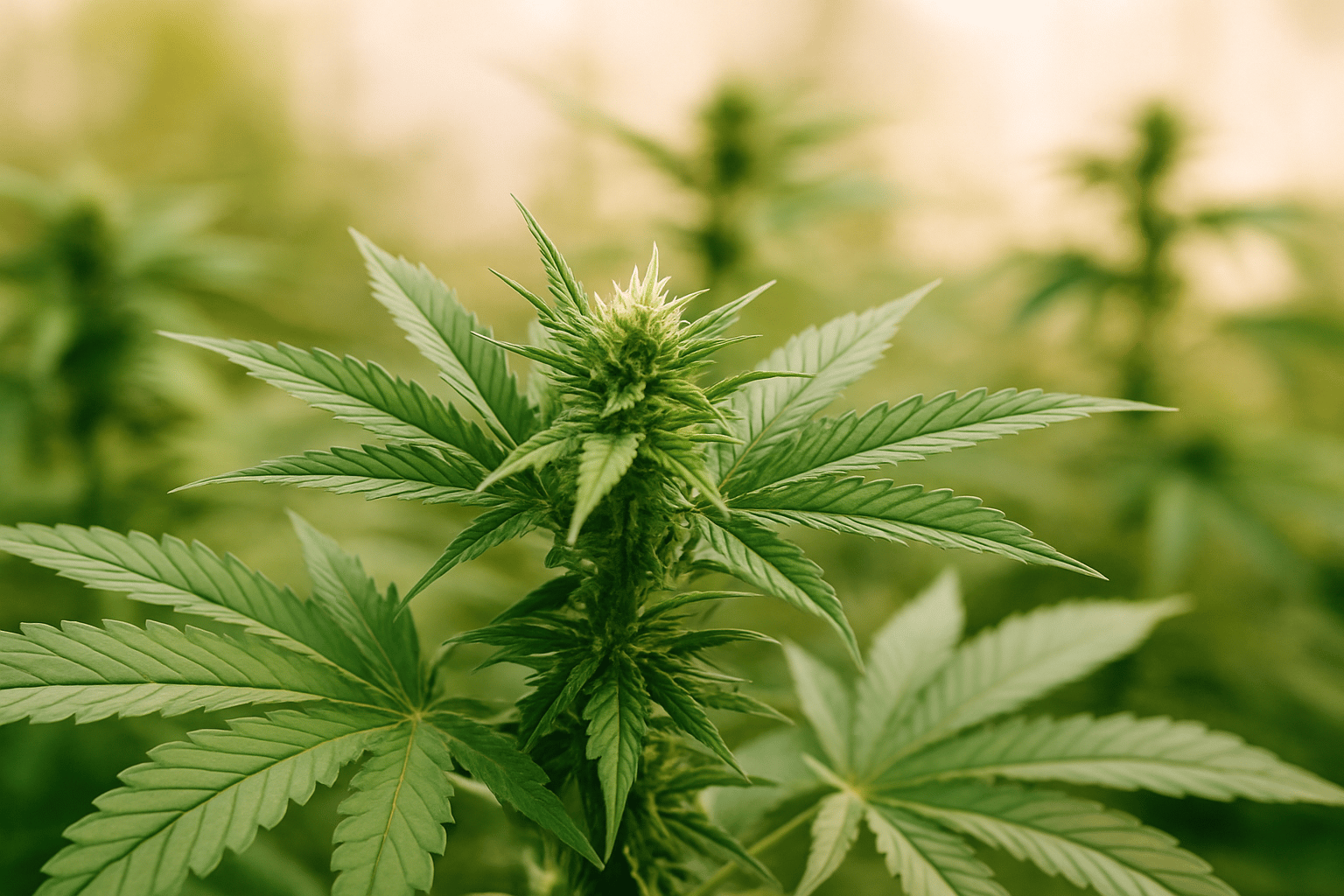
Why cannabis deficiencies are so often misdiagnosed
Anyone growing cannabis tends to think “more fertilizer” as soon as leaves turn yellow. In practice, that is exactly one of the most common mistakes. In our experience, visible deficiency symptoms are often not the actual disorder, but merely the end result of a problem in the root zone. A pH value outside the optimal range, excessive salt levels in the substrate, overly wet soil, or damaged roots can all lead to nutrients being present but not absorbed by the plant. This is called nutrient lockout—and to many growers, it initially looks just like a classic deficiency.
What makes this especially tricky is that different deficiencies can produce very similar symptoms. Chlorosis, burnt leaf edges, rusty spots, or deformed new growth can point to calcium, magnesium, potassium, iron, or even root stress. On top of that, the plant always shows symptoms with a delay. What you see on a leaf today was often triggered several days—or even a week—earlier in the root zone. That is why panicked overfeeding rarely leads to a clean solution.
If you want to assess deficiencies reliably, you always need to read the full picture: What stage is the plant in? Are old or young leaves affected? Is the problem appearing at the top or bottom? What do pH, EC, watering rhythm, climate, and substrate look like? In practice, this exact order makes the difference between a targeted correction and an escalation caused by overreacting. If you do not yet have your baseline parameters fully under control, it is worth first reading How to Water Cannabis Properly: Master Water, Timing, and Common Mistakes and Fertilizing Cannabis: Master Nutrients, Dosage, and Common Mistakes.
The most common causes behind visible deficiencies
A true nutrient deficiency occurs when an element is genuinely unavailable in sufficient quantity in the root zone. This happens, for example, with depleted soil, feeding that is too weak during vigorous growth, or very soft water without adequate calcium and magnesium supply. More often, however, we see secondary deficiencies: the nutrient is there, but the plant cannot use it. This happens especially often when the pH is off. In soil, the useful range is usually around 6.2 to 6.8; in coco, more like 5.8 to 6.2. Even small but persistent deviations can massively reduce the uptake of individual elements.
A second classic issue is overfertilization. Many growers expect heavier feeding to automatically result in faster growth. In reality, this often only increases the salt concentration in the medium. The roots come under osmotic stress, the plant drinks less efficiently, and deficiency symptoms suddenly appear even though the pot is full of nutrients. This is typical in coco and rockwool, but it also happens in soil with mineral feeding. Anyone monitoring EC and PPM can spot these developments much earlier. For that, our in-depth article Cannabis Cultivation: Understanding EC and PPM in Detail is a perfect follow-up.
Environmental stress should not be underestimated either. Root zones that are too cold, below 18 °C, noticeably slow phosphorus uptake. Intense heat above 29 to 30 °C increases metabolic stress and can worsen magnesium and calcium issues. Very high humidity reduces transpiration; as a result, calcium in particular is transported less effectively into young plant tissue. In our experience, many supposed “nutrient deficiencies” are actually caused by a combination of watering mistakes, climate imbalance, and root stress.
| Symptom | Typical cause | What to check first |
|---|---|---|
| Yellow lower leaves | Nitrogen deficiency or root stress | Feeding schedule, pot weight, pH in runoff |
| Rust spots on young leaves | Calcium lockout, pH issue | Water quality, pH, humidity |
| Interveinal chlorosis on older leaves | Magnesium deficiency | CalMag supply, EC, light intensity |
| Dark leaves with burnt tips | Overfertilization | EC in the substrate, watering frequency |
| Purple stems plus stunted growth | Cold, phosphorus issue, genetics | Root temperature, pH, bloom feed |
How to read the damage pattern correctly: old leaves, young leaves, mobile and immobile nutrients
A very useful diagnostic principle is the distinction between mobile and immobile nutrients. Mobile nutrients such as nitrogen, phosphorus, potassium, and magnesium can be relocated by the plant from older leaves into new growth. That is why deficiencies of these elements usually show up first lower down or in older fan leaves. Immobile nutrients such as calcium, iron, and boron, on the other hand, are not redistributed as easily. If one of these is lacking, the first damage is more likely to appear in young shoots, fresh leaves, or at the growing tips.
In practice, this pattern saves an enormous amount of guesswork. If the lower leaves are lightening evenly and the plant is becoming paler overall, nitrogen is more likely than iron. If new leaves emerge twisted, spotted, or with necrotic points, it is worth looking at calcium, boron, or problems in the root zone. But this is important: not every yellow leaf is a deficiency. In late flowering, some breakdown of older leaves is normal as long as the plant remains vigorous overall and the buds ripen properly. Anyone who correctly classifies the developmental stages avoids many misdiagnoses. For that, Cannabis Growth Stages: A Guide for Every Phase of Development is a useful addition.
Another practical point: always assess symptoms across several leaves and across the whole plant, never based on a single leaf. A leaf that got wet during watering, rested against the tent wall, or was mechanically damaged can look like a nutrient issue. Only when the pattern appears systematically and spreads should you actively intervene.
Nitrogen, phosphorus, and potassium deficiency in cannabis
Nitrogen deficiency
Nitrogen deficiency usually appears first on older, lower leaves. They fade from deep green to lime green and later turn uniformly yellow. In more severe cases, the leaves become completely yellow, dry out, and fall off. Growth slows noticeably, internodes remain short, and the plant looks pale overall. In the vegetative stage, this is problematic because the plant loses leaf mass and photosynthetic surface area.
The correction is usually simple if too little nitrogen is truly being supplied: increase feeding moderately, not by suddenly doubling it. In soil, we often see good results when the correction is made gradually over 2 to 3 irrigations rather than aggressively all at once. In late flowering, however, nitrogen deficiency should not be overtreated. A slight natural fade toward the end is normal and often even desirable.
Phosphorus deficiency
Phosphorus deficiency is rarer than many think and is often confused with cold stress. Typical signs are darker, sometimes bluish-green leaves, slowed growth, and in advanced deficiency, necrotic spots or bronze-colored areas. Stems may turn reddish or purple, although that alone is not proof, since many genetics naturally develop pigmentation.
In our experience, true phosphorus deficiency often occurs during nights that are too cold, in cold substrate, or when pH is off. Before adding more PK, check root temperature first. We see this regularly under LED lighting in basement grow rooms: the room seems fine, but the pot is too cold. Only when climate and pH are correct and the plant is genuinely underfed in bloom should phosphorus input be increased in a targeted way.
Potassium deficiency
Potassium deficiency often begins on older leaves with leaf edges and tips that look burnt. The margins turn yellowish, later brown and dry, while the veins may initially remain green. Plants are often less resilient to heat and drought stress, and in flowering, flower development may stall.
In practice, potassium issues can quickly resemble light stress or salt damage. Especially when only the upper leaves are affected, you should not rush to add more potassium. Check EC, lamp distance, and climate. A true potassium deficiency is rather rare when using complete bloom fertilizers; more often, the cause is antagonism from too much calcium, ammonium, or generally excessive salt levels.
How to reliably distinguish calcium, magnesium, and iron deficiency
Calcium deficiency
Calcium is one of the most frequently misunderstood nutrients in cannabis cultivation. Typical signs are small rusty spots, irregular necrosis, twisted young leaves, and inhibited fresh growth. Fast-growing plants under strong LED lighting, in coco, with very soft water, or under high humidity are particularly susceptible. Calcium is transported via the transpiration stream. If the plant is not “pulling” much, too little reaches the new growth—even if calcium is present in the tank.
We see calcium issues especially often in coco grows when growers run only a basic feeding schedule and underestimate either the substrate’s pre-charge or the higher demand under intense lighting. A targeted CalMag application helps here, but only sustainably if pH, root health, and climate are also correct. For the details, it is worth reading Calcium Deficiency in Cannabis Plants: Identification and Correction.
Magnesium deficiency
Magnesium deficiency typically appears on older leaves as interveinal chlorosis: the areas between the veins lighten while the veins themselves remain green for longer. Later, rusty spots develop and the leaf dies back partially. Under LED, this occurs more often than many expect because strong light intensity drives metabolism and increases magnesium demand.
A common mistake is treating magnesium and calcium blindly. While both often come together as CalMag, an imbalance can also be caused by too much potassium or excessively high EC. In soil, Epsom salt can help in small, controlled amounts; in coco or hydro, the adjustment should be made cleanly through the nutrient solution. The key is always not just to feed the symptom, but to check the balance of the overall system.
Iron deficiency
Iron deficiency primarily affects young leaves in the upper part of the plant. They turn light yellow to almost white, while the veins initially remain green. Unlike magnesium deficiency, the symptoms therefore do not start lower down. True iron deficiency is rather rare in well-balanced feeding systems. Most often, the cause is pH that is too high, especially in soil or with hard water.
If the shoot tips are turning pale but EC is already high, additional feeding is usually the wrong response. That only worsens salt stress. In such cases, we have seen the best results from correcting pH, establishing a clean watering rhythm, and, where there is heavy salt buildup, applying a light flush if necessary.
Micronutrients: boron, zinc, sulfur, and why they are rarer but tricky
Micronutrient deficiencies are much rarer than nitrogen, calcium, or magnesium issues, but they can severely slow growth. Boron deficiency often shows up as deformed shoot tips, brittle new growth, and poor cell structure. Zinc deficiency can cause small, misshapen new leaves and shortened internodes. Sulfur deficiency resembles nitrogen deficiency at first glance, but it tends to begin in young growth rather than on old leaves.
In practice, these symptoms are often not caused by an absolute lack in the fertilizer, but by pH issues, root disturbances, or very one-sided feeding strategies. Anyone supplementing isolated elements in high doses can quickly throw off the entire nutrient balance. Restraint is especially important with micronutrients. A well-formulated complete fertilizer system is almost always safer than wildly mixing many individual products.
If you suspect boron, it is worth taking a closer look at Boron Deficiency in Cannabis Plants: Identification and Correction. However, such specialized deficiencies should only be treated in isolation once the baseline parameters have truly been ruled out. Otherwise, you end up treating past the actual cause.
The right process for correction: do not guess, check systematically
When a plant shows deficiency symptoms, in practice we almost always work through the same sequence. First: check irrigation. Is the substrate permanently too wet, waterlogged, or completely dried out? Second: monitor pH and, if possible, EC in the feed water and in the runoff. Third: check the climate—daytime temperature ideally around 24 to 28 °C, nighttime temperature not too cold, root zone preferably 20 to 24 °C. Fourth: compare the feeding schedule with the plant’s stage and size.
Only then should corrections be made. In cases of overfertilization or severe lockout, a moderate flush is more sensible than adding even more nutrients. In cases of true underfeeding, feeding should be increased carefully, not abruptly. The plant needs time to respond. New leaves must come in healthier; old damage generally does not heal. Anyone expecting perfect appearance after 24 hours almost always reacts too hastily.
- Locate the symptoms: top or bottom, old or young, uniform or patchy.
- Check the substrate: dry, moist, compacted, salty.
- Measure pH: soil usually 6.2–6.8; coco 5.8–6.2.
- Assess EC: high EC plus deficiency symptoms often points to lockout.
- Control the climate: heat, cold, humidity, airflow.
- Correct selectively: only one major change at a time.
- Observe for 48–72 hours: evaluate the new growth above all.
A common mistake we keep seeing: using several products at the same time—CalMag, PK booster, enzymes, foliar feed, and then another base fertilizer on top. That makes diagnosis impossible. A clear, calm correction with traceable steps is far better.
Prevention: how to avoid deficiencies from the start
The best treatment is a stable system. Choose a substrate that suits your style and truly learn its characteristics. In soil, many things are buffered better, but corrections react more slowly. In coco, cannabis often grows faster, but the system is less forgiving when it comes to pH, CalMag, and watering frequency. Anyone who understands the differences has far fewer problems. You can find more on this in The Best Substrates for Cannabis: Soil, Coco, Rockwool, and Living Soil Compared.
Water quality is just as important. Very soft water can promote long-term calcium and magnesium deficiencies, while very hard water can push pH upward and block certain micronutrients. If you are serious about it, a water analysis—or at least knowing the hardness level and starting EC—is worthwhile. Without this foundation, deficiency diagnosis often happens in the dark.
In our experience, these preventive measures are the most effective: a consistent watering routine based on pot weight rather than the calendar, no unnecessarily high EC values, calibrating your pH meter regularly, keeping the root zone warm, treating climate differently in flowering and vegetative growth, and never overfeeding plants “just in case.” Healthy roots solve more problems than any additive. If you work with clones, clean starting material also pays off, because weak or stressed young plants develop secondary deficiency symptoms much faster. A fitting resource here is Growing Cannabis Clones Successfully: The Guide from Arrival to Harvest.
When the “deficiency” is actually something else
Not every damage pattern is nutrition-related. Broad mites, root diseases, Hop Latent Viroid, Botrytis stress in the crop, or severe light damage can all produce symptoms that at first glance look like a deficiency. Twisted new growth, inhibited shoot tips, or strange spots do not automatically have to be related to calcium, boron, or zinc. If the plant does not respond cleanly despite correct nutrient values, the cause should be investigated more broadly.
This is especially important with clones. A plant with a latent health issue often first shows nonspecific weakness: slow growth, pale color, poor root development, irregular leaves. Many growers then try to correct it through fertilizer and make the situation worse. In such cases, no more complex feeding schedule will help—only proper crop inspection and an honest root-cause analysis.
If symptoms develop unusually, affect only individual plants, or worsen despite correct correction, pest pressure, pathogens, and genetic factors should also be considered. That is exactly what separates a useful diagnosis from mere guesswork.
Sources
- Bugbee, Bruce – “Cannabis Nutrition and Fertigation Practices”, 2021
- Jones Jr., J. Benton – “Hydroponics: A Practical Guide for the Soilless Grower”, 2016
- Marschner, Petra, ed. – “Marschner’s Mineral Nutrition of Higher Plants”, 2012
- Royal Queen Seeds – “Cannabis Nutrient Deficiencies: A Visual Guide”, 2023

About the Author – Hannah
Hannah focuses on researching, contextualizing, and observing current developments in plant care and modern cultivation techniques. Her focus lies on new methods, optimizing growth conditions, and making complex topics accessible. Her content complements practical experience with analysis, updates, and a keen eye on emerging trends.
Content is regularly reviewed and updated.
This article was created with AI support and editorially reviewed.
More about the team behind LeafConnect