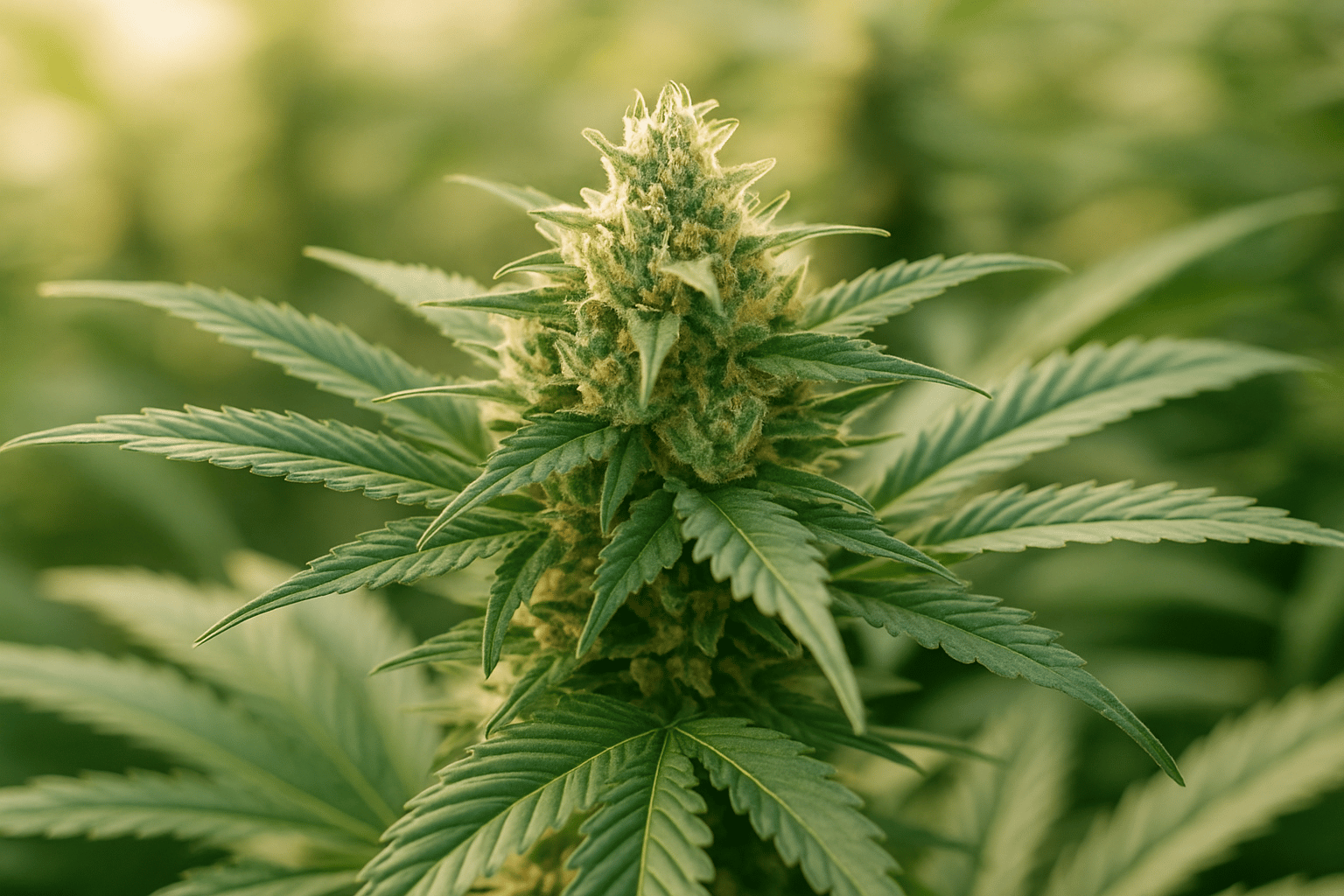
What Flavonoids in Cannabis Actually Are
When people talk about cannabis compounds, THC, CBD, and terpenes are almost always the main focus. Flavonoids often fly under the radar, even though they are highly relevant to the overall quality of a flower. Chemically speaking, flavonoids are secondary plant compounds found in many cultivated plants, including berries, citrus fruits, tea, hops, and parsley. In cannabis, they are present not only in the flowers, but also in the leaves and stems. Their proportion is much smaller than that of cannabinoids, but their influence on sensory and plant-physiological traits is greater than many assume.
In our experience, the importance of flavonoids becomes especially clear when you cultivate the same genetics under different conditions. Two plants with similar THC levels can differ noticeably in smoke, aroma profile, and even the visual effect of the flowers. Part of that comes from terpenes, and another part from flavonoids. They contribute bitterness, sharpness, aromatic depth, and coloration. At the same time, they serve protective functions in the plant against UV radiation, oxidative stress, and to some extent against pests or microbial pressure.
The distinction is also important: flavonoids are not cannabinoids and not terpenes. They do not act in the same psychoactive way, but they are part of a cultivar’s complex overall chemical profile. Anyone who evaluates cannabis only by THC percentage overlooks exactly these nuances. Especially with high-quality flowers, hash, or extracts, it quickly becomes clear that “strong” does not automatically mean “complex” or “well-rounded.”
Which Flavonoids Are Especially Relevant in Cannabis
Cannabis contains a whole range of flavonoids. Particularly well known are cannflavins, meaning flavonoid-specific compounds that are characteristic of cannabis. In addition, more widely distributed flavonoids such as quercetin, kaempferol, and apigenin are also found. For many growers, these names may sound theoretical at first, but in practice they help determine color nuances, flavor edges, and the stability of plant tissue.
Cannflavin A, B, and C are often mentioned because they are scientifically especially interesting as cannabis-specific flavonoids. They are suspected to have strong antioxidant and inflammation-modulating properties. For cultivation, however, what matters most is that such compounds reflect both genetics and crop management. A plant that can fully ripen under clean light, in a stable root zone, and without constant stress will usually develop its secondary metabolite profile more completely than a plant struggling with overfeeding, heat, or root pressure.
A common misconception is that flavonoids are responsible only for purple or red colors. That is too simplistic. Anthocyanins, which belong to the flavonoid group, do play a major role in blue, red, and purple tones, but flavonoids as a whole influence far more than appearance alone. Many yellowish or golden reflections, the perception of freshness, and even the way a cultivar smells “dry” or “juicy” are tied to the interaction of various secondary plant compounds.
| Flavonoid Group | Example | Practical Importance in Cannabis |
|---|---|---|
| Cannflavins | Cannflavin A, B | Part of the cannabis-specific profile, relevant to quality and biochemical complexity |
| Anthocyanins | Cyanidin derivatives | Partly responsible for purple, red, and bluish color tones |
| Flavonols | Quercetin, Kaempferol | Antioxidant protection, influence on plant vitality and sensory depth |
| Flavones | Apigenin, Luteolin | Involved in stress responses and the plant’s overall profile |
Influence on Aroma, Flavor, and the So-Called Entourage Effect
Anyone who has compared two visually similar flowers knows the phenomenon: one smells loud, sweet, and open, while the other feels darker, spicier, or slightly more bitter. Terpenes provide the obvious peaks in the aroma profile, but flavonoids often fill in the background. They add structure, bitterness, dryness, and sometimes an almost citrus-like or herbal depth. Especially in cultivars with complex Kush, Haze, or fruit profiles, it becomes clear that the experience is not made up only of myrcene, limonene, or caryophyllene.
In our experience, flavonoids become especially relevant when flowers have been cultivated very cleanly and dried with care. Poor drying or overly aggressive post-processing destroys the fine differences first. What often remains is a flat, grassy, or dull profile. By contrast, anyone who dries slowly, cures cleanly, and avoids temperature spikes preserves more of the chemical differentiation. You can find more on this in our article Curing Cannabis: How Aroma, Effects, and Quality Mature Properly.
When people talk about the so-called entourage effect, they usually focus on the interaction between cannabinoids and terpenes. That is justified, but incomplete. Flavonoids are very likely part of this overall picture as well. They may not alter the effects as directly and measurably as THC or CBD, but they can shape the sensory perception, stimulus quality, and possibly even the biological activity of cannabis. That is why a cultivar with moderate THC and a complete secondary metabolite profile often feels more pleasant and “fuller” than a highly bred flower with a one-dimensional character.
How Flavonoids Influence the Color of Cannabis Flowers
When flowers ripen purple, dark red, or almost black, this is often seen as nothing more than a show effect. In reality, plant biochemistry is behind it. Anthocyanins, a subgroup of flavonoids, can accumulate in certain tissues and create different shades depending on pH, genetics, and environmental conditions. This is especially pronounced in Purple lines, some Cookies hybrids, or cool outdoor nights in autumn.
A classic mistake is trying to force color artificially through cold stress. Yes, lower night temperatures can intensify purple tones in suitable genetics. But if growers cool things down too aggressively in late flower, for example by staying permanently below 16 to 17 °C, metabolic activity often suffers. That can slow resin production, nutrient uptake, and ripening. We have often seen visually spectacular flowers that ended up flatter in aroma because the plant was stressed too hard.
That is why the sequence matters: first, the genetics must allow color in the first place, and then environmental factors may bring it out moderately. Good purple expression usually comes from healthy plants, stable root conditions, and a controlled ripening phase, not from shock methods. Anyone who wants to encourage color development should focus more on clean flowering management, balanced nutrition, and moderate day-night differentials instead of trying to “freeze the plant purple” in the last two weeks.
Why Genetics Account for the Largest Share
As important as environmental factors are, the basic potential for flavonoid profile, color expression, and aromatic depth is genetically determined. Some cultivars naturally build more anthocyanin-rich pigments, while others remain consistently green even at cool temperatures. The same applies to flavor signature. A cultivar with a thin secondary metabolite profile cannot be turned into a complex aromatic wonder through perfect care alone.
That is why cultivar selection is especially worthwhile if you are growing specifically for color, bouquet, or certain sensory traits. With clones, this advantage is even clearer: you are working with known, reproducible genetics. This is especially interesting for growers who want a consistent flavonoid and terpene profile. If you rely on uniform results, stable THC clones or selected CBD clones are often more predictable than a mixed seed run with strongly varying phenotypes.
Another practical point: even within one cultivar, individual phenotypes can vary greatly. One may show dark leaf stems, berry-like undertones, and early purple coloration, while another stays lighter and more citrus-forward. Anyone keeping mother plants or selecting from a seed run should therefore pay attention not only to growth structure and yield, but also deliberately to aroma in the rub test, leaf color play, temperature response, and flowering stability. That is exactly where mass-market material is separated from true keeper genetics.
Cultivation Conditions That Promote or Inhibit Flavonoids
Flavonoids are part of the plant’s stress and protection biology. But that does not mean maximum stress produces maximum-quality flowers. The best results, in our view, come from mild, controlled stimuli within an overall healthy system. Too much heat, excessively high EC levels, constant dry phases, or light stress often do not create “more character,” but instead lead to blocked ripening and a harsh final product.
Light quality, temperature progression, nutrient balance, and root health are especially relevant. Under well-tuned full-spectrum light, plants usually develop a more complete secondary metabolite profile than under weak or spectrally unbalanced lighting. Indoors, in our experience, a flowering temperature of around 24 to 27 °C with lights on and 18 to 22 °C with lights off has proven to be a good range. At significantly higher values, transpiration and stress increase, while delicate aroma compounds are lost more quickly. If you want to dive deeper into the topic of light, you will find practical details in the article Cannabis Lighting: Which Grow Light Really Fits and How to Use Light Strategically for Higher Yields.
Nutrition also plays a role. Excessive nitrogen in flower often makes plants dark green, soft, and sensorily underdeveloped. A more balanced ratio with proper phosphorus, potassium, magnesium, and trace element management, on the other hand, supports ripening, pigment formation, and resin quality. Boron, magnesium, and in some cases sulfur are especially underestimated when it comes to aromatic complexity. The rule here is: do not work blindly with additives, but always consider water values, EC, and substrate. In practice, a stable pH range of around 6.2 to 6.7 in soil and 5.8 to 6.2 in coco is often crucial so that micronutrients remain available at all.
One common mistake we keep seeing is uneven watering. Swings between bone-dry and soaking wet create root stress and slow the plant down precisely during the phase when it should be forming secondary compounds cleanly. Anyone who gets this right improves not only yield, but often also the finesse of the final product. More on this in Watering Cannabis Properly: Master Watering, Timing, and Common Mistakes and Fertilizing Cannabis: Master Nutrients, Dosage, and Common Mistakes.
Harvest, Drying, and Storage: This Is Where Flavonoids Are Often Lost
Many growers invest weeks in good genetics and clean cultivation, only to lose part of the quality in the final ten days. Flavonoids are in some cases more stable than certain highly volatile terpenes, but they still react to oxidation, light, heat, and poor handling. Dry rooms that are too warm, direct airflow onto the flowers, or rushed finish-drying in a cardboard box quickly ruin the fine details that were built up beforehand.
In our experience, slow drying at around 16 to 20 °C and 55 to 60% relative humidity is a very good corridor, provided the air is moving cleanly but not blowing directly onto the buds. The goal is not only mold prevention, but controlled water loss. If the outer layer dries too quickly, the flower effectively seals itself, moisture remains trapped inside, and the delicate aroma and flavor notes disappear from the outside first. Anyone who misses the right harvest window or cuts too early also takes away valuable ripening time for the plant’s full compound profile. Our guide Harvesting Cannabis: The Right Timing, Clean Technique, and Maximum Quality fits perfectly here.
After drying, storage becomes the deciding factor. Lightproof containers, cool temperatures, and as little oxygen contact as possible help preserve the profile for longer. Frequent opening, warm storage above 22 °C, or keeping flowers in clear jars on a windowsill are classic quality killers. Flowers with complex fruit, herbal, or purple notes in particular degrade sensorily faster than many people think.
Common Misunderstandings About Cannabis Flavonoids
The first misunderstanding is that flavonoids are just marketing. That is not true. While they are sometimes presented in sales copy as miracle molecules in an imprecise way, their existence and role in plant physiology and sensory expression are well documented. What must be said honestly is this: many specific claims about effects in humans are not yet as robust as some advertising texts suggest. There is a big difference between “an interesting class of compounds” and “medically proven beyond doubt.”
The second misunderstanding: more color automatically means higher quality. A deep purple flower can be excellent, but it does not have to be. We have seen plenty of purple flowers that looked spectacular but tasted flat. Conversely, light green cultivars with hardly any visible color play can deliver an extremely complex flavonoid and terpene profile. Color is an indicator, not proof of quality.
The third misunderstanding: flavonoids can simply be boosted with an additive from a bottle. That is not how plant biochemistry works. Additives can prevent deficiencies or stabilize conditions, but they do not replace genetics, root health, or proper climate control. If a plant is struggling with incorrect VPD, excessive salinity, or latent pathogen pressure, no booster will turn it into top-shelf quality.
What Buyers and Growers Should Look for When Choosing a Cultivar
If you choose cultivars specifically for sensory quality, it is worth looking beyond THC values or yield claims. More interesting are descriptions such as berry-like, herbal, floral, dark-spicy, citrus-bitter, or grape-like, because these often point to a differentiated secondary metabolite profile. Notes about purple tendencies, cool color expression, or especially pronounced resin and aroma development can also be useful, as long as they are interpreted realistically.
For beginners, it usually makes more sense to work with stable, well-known lines instead of testing ten exotic cultivars at once. That way, you learn more quickly how strongly genetics and environment influence the profile. Anyone who wants to select deliberately can work with high-quality THC seeds and identify the most interesting phenotype from several plants. Those seeking reproducible results for aroma and color, on the other hand, are often more efficient with tested clones.
From our perspective, the best approach is always this: choose genetics that match your setup. A cultivar with high potential for complex flavonoids is of little use if your room runs too hot all the time or if you are growing outdoors in a wet autumn and have to harvest early. In that case, a robust line that ripens cleanly is often the better choice. That is exactly why location, climate control, and cultivar profile should never be viewed separately.
Sources
- Andre, C. M.; Hausman, J.-F.; Guerriero, G. – “Cannabis sativa: The Plant of the Thousand and One Molecules”, 2016
- Flores-Sanchez, I.; Verpoorte, R. – “Secondary Metabolism in Cannabis”, 2008
- Pollastro, F.; Minassi, A.; Fresu, L. G. – “Cannflavins and the Therapeutic Potential of Cannabis Flavonoids”, 2018
- Happyana, N.; Agnolet, S.; Muntendam, R. et al. – “Analysis of Cannabinoids and Terpenoids in Cannabis by Metabolomics Approaches”, 2013
About the Author – Ben
Ben has been intensively involved in the cultivation and care of cuttings and the healthy development of plants during the growth phase for several years. His focus lies on low-stress training methods, stable growth conditions, and avoiding common care mistakes. The content is based on practical experience, proven methods, and real observations from daily work with young plants.
Expert contribution & updates: Hannah – Research, contextualization of current methods and observation of new developments.
This article was created with AI support and editorially reviewed.
More about the team behind LeafConnect