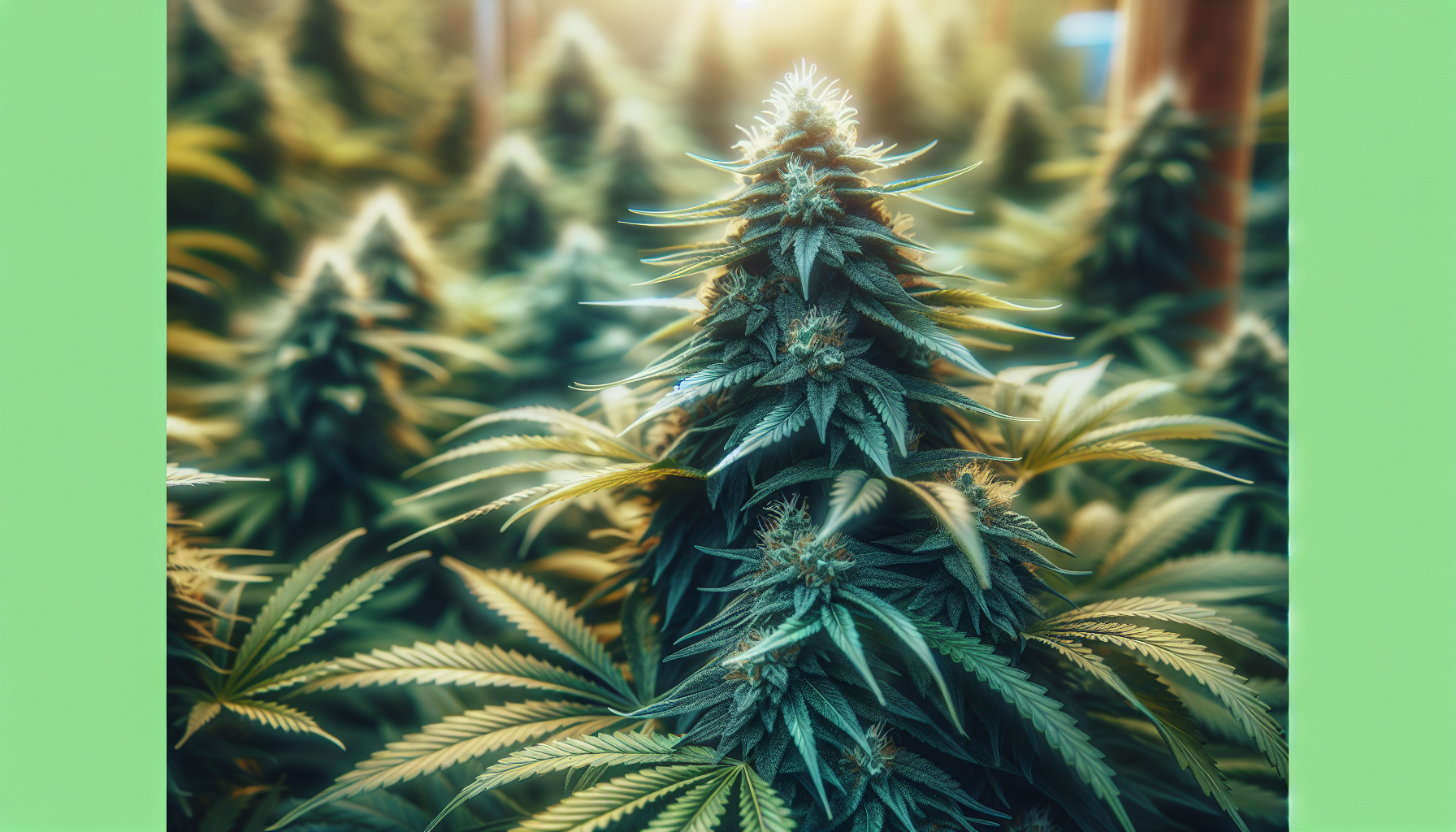
Why Growing Outdoors from Seed Works Differently Than Indoors
For many growers, cultivating cannabis outdoors from seed sounds simpler than an indoor grow: soil, sun, water – done. In practice, however, outdoor cultivation is above all a matter of timing, genetics, weather, and site selection. That is also exactly what makes it appealing. A healthy plant under natural sunlight can develop tremendous vigor, build a deep root system, and, with the right cultivar, show impressive resilience. At the same time, outdoor growing forgives planning mistakes far less readily, because you cannot control temperature drops, prolonged rain, wind pressure, or mold risk with the flip of a switch.
In our experience, the biggest misconception with outdoor seeds is this: many growers approach the grow too passively. They sow too early, choose just any spot in the garden, or underestimate how strongly pot size, soil preparation, and microclimate affect yield. Especially in Germany, Austria, and Switzerland, success is determined not only by the number of sunshine hours, but also by when the plant enters the season and how well it stays healthy into autumn.
Another important point: plants grown from seed show more variation than clones. That can be an advantage, because seedlings often develop a strong taproot and establish themselves very vigorously outdoors. At the same time, it also means that growth structure, stretch, and flowering time can vary slightly within a cultivar. If you are looking for maximum uniformity, you should also take a look at 5 good reasons to use clones instead of seeds. For many outdoor growers, however, seeds remain the first choice – above all because of their vigorous early development, easy storage, and wide cultivar selection.
It is also important to set realistic expectations: outdoor cultivation does not follow a rigid plan, but the weather and the seasons. Those who accept that and adapt the crop to the conditions often end up with more robust plants than indoors. The sun provides a spectrum and intensity that can only be replicated artificially with considerable effort. That is exactly why it pays to build a solid foundation outdoors instead of dealing later with stress, deficiencies, or mold.
Choosing the Right Genetics for Outdoor Cultivation
If you grow outdoors, the cultivar often determines success or failure more than any fertilizer ever will. In more northern regions with changeable summers and wet autumns, you need robust, fast, and mold-resistant genetics. Late-flowering, heavily sativa-dominant cultivars can perform fantastically in Mediterranean climates, but in Central Europe they often end up half-ripe or with Botrytis in the main buds. We have often seen beginners get dazzled by THC percentages or exotic names while ignoring the real outdoor criterion: climate suitability.
Photoperiod seeds are ideal if you want large plants and high yields and the season is long enough. Autoflowering cultivars make sense if you want to stay more discreet, harvest earlier, or attempt multiple runs per year. However, autos are more sensitive to stress in the first 3 to 4 weeks because their vegetative phase is time-limited. A growth stall caused by cold nights, transplant stress, or waterlogging directly reduces final weight in autos.
For Central European conditions, we generally recommend cultivars that finish no later than late September to mid-October, ideally with proven mold resistance. You can find good guidance in our article The best cannabis strains for outdoor cultivation in Germany 2026. If you are still selecting, it is also worth reading Sativa vs. Indica: What really matters, because growth structure and flowering behavior are more important outdoors than pure marketing terms.
| Type | Outdoor advantages | Outdoor disadvantages | Suitable for |
|---|---|---|---|
| Photoperiod | Large plants, high yield potential, responds well to training | Longer season, higher autumn risk | Gardens, sunny locations, experienced growers |
| Autoflowering | Fast harvest, more discreet, independent of day length | More stress-sensitive early on, smaller margin for error | Short summers, balconies, early harvests |
| CBD-dominant | Often robust lines, versatile use | Not every line is mold-stable | Medically oriented growers, milder profile |
When choosing, it is also worth considering plant height. Some outdoor cultivars stretch heavily in summer and quickly become too conspicuous, while others stay more compact and are easier to conceal or adapt to limited space. If you only have a balcony or a small terrace, you should not choose the highest-yielding cultivar, but rather genetics that harmonize with the available space. This is exactly where good planning separates itself from mere hope.
Germination and Early Propagation: The Best Start for Outdoor Seedlings
Direct sowing outdoors is possible, but in our cultivation practice it is rarely the best method. Birds, slugs, cold soils, and strong temperature fluctuations quickly make life difficult for freshly germinated seeds. Starting plants indoors, in a greenhouse, or at a bright window with supplemental light is safer. This allows you to control the first critical 10 to 20 days and only move strong young plants outside.
Germination at 22 to 25 °C in a lightly moist, not wet environment has proven effective. Whether you germinate in starter cubes, directly in small pots, or between moist towels is secondary – what matters is oxygen in the root zone. Conditions that are too wet are one of the most common reasons for slow or failed germination. As soon as the taproot appears, the seed should be placed about 0.5 to 1 cm deep in a loose propagation substrate.
A key practical note is especially worthwhile during germination: not all cannabis seeds are the same size. There are very small seeds of around 1 mm, medium ones around 3 mm, and significantly larger examples of 5 mm. That is exactly why the often-recommended 12-hour glass-of-water method is not universally ideal. A vigorous 3-mm seed can usually tolerate it well, but a very small 1-mm seed may not. The smaller and finer the seed, the more problematic prolonged soaking can become. From our perspective, wet tissue or moist kitchen paper is often the better choice because you can control moisture very precisely without leaving the seed fully submerged in water.
For the first 10 to 14 days, a mildly pre-fertilized substrate is sufficient. Seedlings do not need a heavy nutrient charge at this stage, but rather warmth, light, and even moisture. A pH of around 6.0 to 6.5 in soil works reliably. If young plants are kept too dark, they develop long, unstable stems. If they are placed too early into intense midday sun, you risk sun stress. That is why we always harden plants off gradually: first a few hours in partial shade, then more direct sun each day over 5 to 7 days.
If you want to dive deeper into substrate selection, The best substrates for cannabis is a useful addition. Outdoors, we most often see good results with high-quality soil or well-built living soil, because these systems buffer moisture and absorb fluctuations better than very fast, hydro-like media.
Choosing an Outdoor Site: Sun, Wind, Soil, and Microclimate
The best outdoor site is not simply the sunniest point on the property, but the place with the best overall package. Cannabis loves abundant light – ideally at least 6 hours of direct sun, better 8 or more. Morning sun is especially valuable because it dries dew more quickly and therefore reduces fungal pressure. A spot that only gets sun late and stays damp well into the evening is significantly riskier in autumn than a slightly less intense but airier location.
Wind is a double-edged issue. Light air movement strengthens stems and reduces stagnant moisture in the canopy. Constant strong wind, however, slows growth, dries pots out extremely quickly, and can break shoots. In our experience, plants perform best in locations with good air circulation but without permanent high wind. Hedges, open fences, or windbreaking companion plants can help without blocking airflow completely.
When it comes to soil, structure matters most. Heavy, compacted clay holds water, but quickly leads to oxygen deficiency at the roots. Very sandy soils, on the other hand, dry out too quickly and store nutrients poorly. Ideal is a loose, humus-rich soil with good drainage. If you plant directly into a bed, it is worth preparing the planting hole generously – around 40 to 60 liters of loosened soil per plant is a good start for medium-sized outdoor plants, and significantly more for large specimens. Organic matter, compost, worm castings, and amendments such as perlite or pumice noticeably improve water balance and aeration.
If you want to start even earlier in the season, you should weigh the risks carefully. Our article Growing cannabis outdoors in March: opportunities and challenges fits well here. Cold nights below 8 to 10 °C in particular noticeably slow young plants, and prolonged cold periods can even push photoperiod cultivars into pre-flowering or stress responses under unfavorable conditions.
Pot or Open Ground: Which Method Works Better Outdoors
Both work, but the differences are greater than many think. In open ground, plants can develop a much larger root system, which in suitable soil almost always leads to more vigor, better drought resistance, and higher final yield. The downside is that you are more dependent on the existing soil and have less control during prolonged rain. In pots, you have more control over substrate, fertilization, and mobility – but plants dry out faster and often stay unnecessarily small if the containers are too small.
For autoflowers, we usually recommend the final pot directly from germination or at least very early on to avoid root stress. 11 to 20 liters can work, while 20 to 30 liters are often more forgiving under good conditions. Photoperiod cultivars outdoors usually benefit from 30 to 50 liters and up when grown in pots. If you want truly large plants, you quickly end up at 65 to 100 liters or directly in the ground.
A typical mistake is black plastic in full sun without a mulch layer. In midsummer, this causes the root zone to heat up too much very quickly. Light-colored fabric pots, mulch made from straw or leaves, and a slightly raised position improve temperature stability and oxygen supply. We have often seen two genetically identical plants perform completely differently based solely on pot volume and root climate. Outdoors, yield begins below the soil line.
In pots, you should also assess watering frequency realistically. Small containers often need daily checks in July and August, sometimes even twice a day. In beds, water retention is better, but it takes longer to correct mistakes. If you want to stay mobile, pots are the better option. If you want maximum root development and natural buffering, growing in the ground usually has the advantage.
Watering and Feeding in the Open Air
Outdoors, plants are often either overwatered or underwatered. The problem is that rain can be deceptive. A brief shower often only moistens the surface while the root zone remains dry. Conversely, heavy soil can stay wet for a long time after several rainy days even though the surface already looks dry again. That is why you should not water by the calendar, but by pot weight, the finger test, and the plant’s appearance. Drooping leaves in the afternoon do not automatically mean thirst; in high heat, that can also be a normal transpiration response. It becomes critical if the plant still looks limp in the morning.
For pH, a range of 6.2 to 6.8 generally works well outdoors in soil. In organically active substrates, soil life buffers a lot, but consistently very alkaline irrigation water should still not be ignored. With very hard water, we regularly see calcium and trace element issues outdoors that are mistakenly interpreted as underfeeding. If you see symptoms such as deformed new growth or rusty spots on young leaves, do not blindly add more fertilizer – check water values and pH first. Our article Calcium deficiency in cannabis plants: identification and correction is relevant here.
During the vegetative stage, cannabis primarily needs nitrogen, along with sufficient calcium, magnesium, and trace elements. Once flowering begins, demand shifts more strongly toward phosphorus and potassium, but nitrogen should not suddenly drop to zero. A common beginner reaction is excessive use of bloom fertilizer. This leads to salt stress, dark foliage, and in the worst case burnt tips in the middle of the season. Organic outdoor feeding programs are often more forgiving, while mineral fertilization acts faster and more precisely but requires more attention. If you want to classify nutrient concentrations accurately, Cannabis cultivation: understanding EC and PPM in detail will help.
Training, Pruning, and Plant Structure in Outdoor Grows
Outdoor plants benefit greatly from controlled structure, but not every technique suits every cultivar or climate. Photoperiod plants respond well to topping, tying down, or being built early into multiple main shoots. This improves light distribution, reduces final height, and can make the plant more stable against wind. We use training outdoors primarily when discretion is important or when we want broad, airy canopies instead of a single dominant main bud.
With autoflowers, we are much more cautious. Gentle low-stress training can work, but hard topping is only worthwhile on very vigorous plants with an optimal start. Any growth stall during the short juvenile phase costs flower mass later on. A common mistake is training too late, when the stems have already become woody. At that point, shoots break more easily, and the plant invests energy in repair instead of development.
Defoliation should also be done selectively. Outdoors, not every leaf mass is a problem – on the contrary, leaves are energy reserves. What should be removed are primarily weak, shaded inner shoots that will never reach the light, as well as dense, poorly ventilated material in the lower zone. This improves airflow and reduces disease pressure. You can find more on this in Pruning cannabis and How to prune cannabis correctly: timing & guide. The most important practical principle is this: do not prune out of habit, but with a clear objective.
Recognizing Pests, Fungi, and Weather Stress Early
Outdoors, prevention is far more important than reaction. Once aphids, thrips, caterpillars, or spider mites are firmly established, treatment during flowering quickly becomes delicate. That is why we inspect outdoor plants at least two to three times per week, and even daily during critical phases. The undersides of leaves, young shoots, and dense zones inside the canopy are especially important. Yellow sticky traps nearby help detect flying pests early, but they do not replace visual inspection.
In a damp, cool late summer, Botrytis is the greatest risk. Large, compact flowers look impressive, but they are especially susceptible during prolonged rain and poor air circulation. The first signs are often subtle: individual sugar leaves wilting from inside the bud, gray-brown tissue in the interior, or a musty smell. If you wait too long, you can lose large parts of the harvest within just a few days. In our experience, the best defense is a combination of resistant genetics, airy plant structure, clean defoliation in problem zones, and consistent monitoring. For a deeper look, see Botrytis in cannabis: causes, identification, and control.
Weather extremes also deserve attention. Hail, heavy rain, and heat spikes above 32 to 35 °C can visibly stress plants. After hot days, early watering, mulch, and, for potted plants, temporary shading during the harshest midday sun can help. After storms, shoots should be supported or splinted cleanly right away instead of leaving breaks exposed. Many outdoor problems are not dramatic, but cumulative: a little waterlogging, a little wind damage, a little pest pressure – and suddenly the plant lacks strength during flowering.
Managing the Outdoor Flowering Phase Correctly and Hitting the Right Harvest Window
As soon as the days get shorter, the plant shifts its energy into flower production. From that point on, priorities change: less aggressive training, no more rough transplanting, a watchful eye on moisture in the flower zone, and an adjusted nutrient supply. Many growers underestimate how strongly late-summer nitrogen excess can delay flowering and make the plant unnecessarily soft. But too little nutrition is just as problematic – especially with large potted plants in peak bloom that process enormous amounts of water and potassium.
The right harvest time should not be decided by the calendar or breeder information alone. Outdoors, weather windows play a major role. If a cultivar could theoretically go another 10 days, but a week of continuous rain is forecast and the first Botrytis risks are becoming visible, a slightly earlier healthy harvest is often smarter than trying to force the last few percent of ripeness. We rely on a combination of trichomes, flower swelling, the decline of fresh white pistils, and the plant’s overall condition.
If you want to assess the final weeks of ripening more accurately, also read Cannabis flowering phase: how to control yield, resin production, and quality. Outdoors in particular, flowering is not a rigid final sprint, but a phase in which daily decisions about air, moisture, and harvest timing make the quality difference.
The Most Common Mistakes When Growing Outdoors from Seed
The first major mistake is starting too early. Those who raise plants in February or March without stable conditions often produce stretched, stressed young plants that stagnate after transplanting outdoors. Better is a start that fits the region: usually April for propagation and planting out after the last cold nights. The second mistake is choosing the wrong cultivar. A fantastic indoor strain is not automatically a good outdoor strain in Central Europe.
We also very often see excessive care: watering too often, feeding too early, pruning too much. Outdoor plants need care, but they also need rhythm. Those who intervene every day often create more stress than benefit. Another classic mistake is poor site preparation. A poorly loosened planting hole, heavy soil without drainage, or a pot that dries out twice a day in August can hardly be fully compensated for later.
Last but not least, hygiene is underestimated outdoors. Dirty tools, pests carried over from ornamental plants, or dead plant material in the crop unnecessarily increase disease pressure. Error prevention also begins earlier in germination than many think: anyone who treats every seed size the same and soaks small seeds in a glass of water for 12 hours across the board risks unnecessary stress before the first root even forms. Moist tissue is often the more controlled method here. If you want to systematically avoid typical beginner mistakes, we also recommend Common mistakes when growing cannabis plants and how to avoid them. Many problems do not arise during flowering, but weeks earlier through small oversights.
When Seeds Make Sense – and When Clones May Be the Better Choice
Seeds are ideal if you want selection, storability, and vigorous, natural root development. Outdoors in particular, seedlings can produce very robust plants when started properly. In addition, the variety available in seed form is enormous. For many hobby growers, this is the most straightforward entry point, especially if they only cultivate a few plants and want to test different genetics. You can find suitable options at THC seeds.
Clones, on the other hand, offer the advantage that sex and phenotype are already known. You save time in the juvenile phase and get more uniform growth. This is interesting if you want to work predictably or already know a genetic line and want to reproduce it specifically. Outdoors, this can be especially helpful in a short season because you start with a more developed plant stage. If you prefer this route, you will find additional guidance in How to grow cannabis clones outdoors and in our Grow Guide.
The honest practical assessment is this: there is no universally better option. Seeds are not “for beginners,” and clones are not “only for professionals.” The better choice depends on whether you value genetic diversity and root vigor more, or uniformity, time savings, and predictability. What matters is that the starting quality is right and that the method fits the site.
Sources
- EMCDDA – “Cannabis cultivation practices in Europe”, 2022
- Royal Horticultural Society – “Soil structure, drainage and mulching in outdoor cultivation”, 2023
- Cervantes, Jorge – “Marijuana Horticulture: The Indoor/Outdoor Medical Grower’s Bible”, 2015
- Clarke, Robert C.; Merlin, Mark D. – “Cannabis: Evolution and Ethnobotany”, 2013

About the Author – Hannah
Hannah focuses on researching, contextualizing, and observing current developments in plant care and modern cultivation techniques. Her focus lies on new methods, optimizing growth conditions, and making complex topics accessible. Her content complements practical experience with analysis, updates, and a keen eye on emerging trends.
Content is regularly reviewed and updated.
More about the team behind LeafConnect