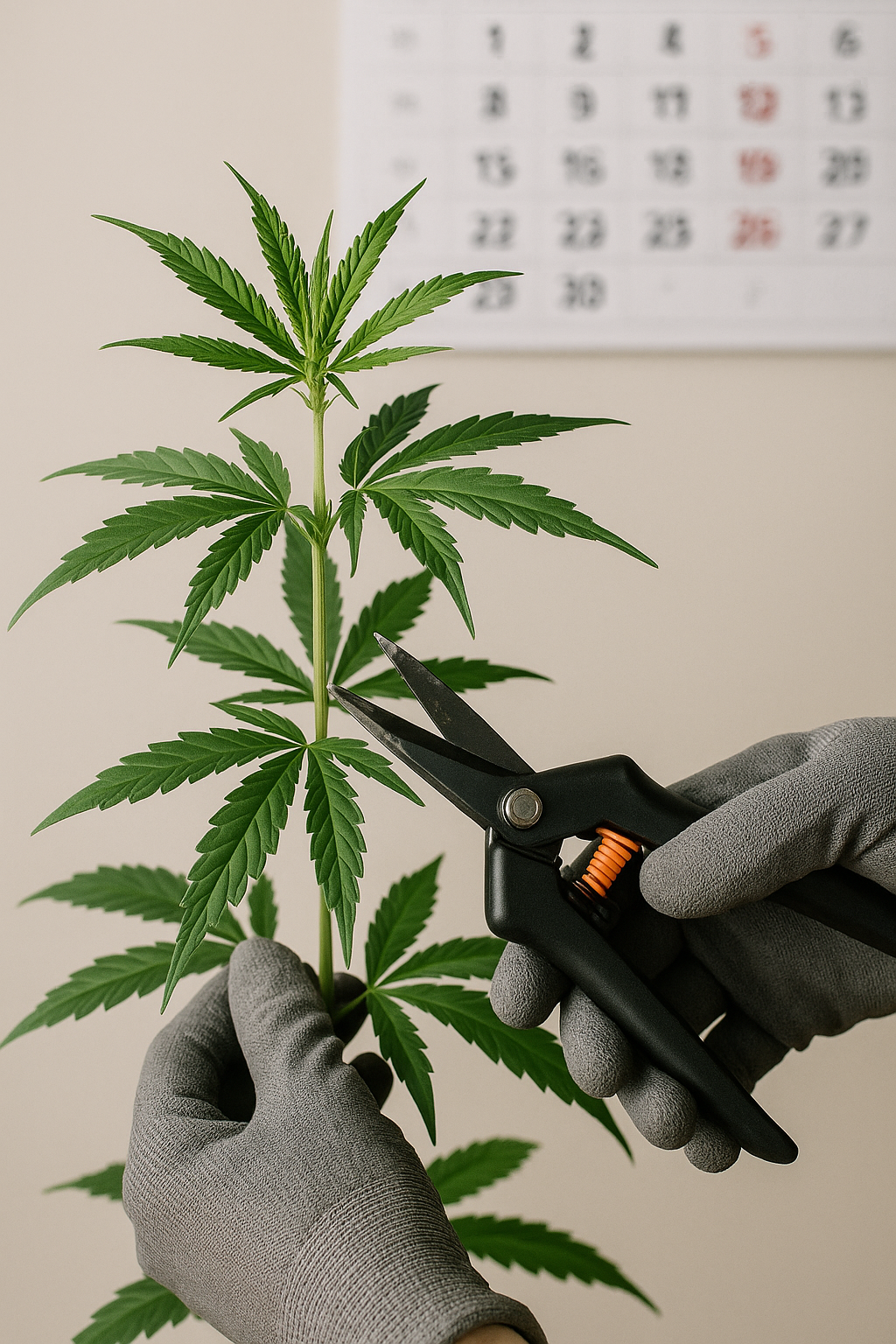
Cannabis richtig beschneiden: Zeitpunkt, Sinn und typische Fehler
Das Beschneiden von Cannabis ist kein Selbstzweck. Richtig eingesetzt, kann es Struktur und Lichtverteilung verbessern – falsch angewendet erzeugt es Stress und bremst die Entwicklung. In diesem Beitrag erfährst du, wann Beschneiden sinnvoll ist, wann Zurückhaltung besser ist und welche Grundprinzipien dir helfen, überlegte Entscheidungen zu treffen.
Hinweis zu Verantwortung & Recht
Informiere dich stets über die geltenden Regeln an deinem Wohnort. Dieser Artikel dient der allgemeinen Einordnung von Pflegeprinzipien und ersetzt keine individuellen Vorgaben oder rechtlichen Hinweise.
Warum überhaupt beschneiden?
Beschneiden wird meist aus drei Gründen eingesetzt:
- Lichtverteilung: Stark beschattete Bereiche erhalten mehr Licht.
- Struktur: Ein gleichmäßiger Wuchs erleichtert Pflege und Kontrolle.
- Luftzirkulation: Dichter Blattbewuchs kann Feuchtigkeit stauen.
Wichtig ist dabei: Beschneiden ist immer ein Eingriff. Je jünger oder gestresster die Pflanze, desto vorsichtiger solltest du sein.
Der richtige Zeitpunkt: Weniger ist oft mehr
Der Zeitpunkt entscheidet darüber, ob Beschneiden unterstützt oder schadet. Als Grundregel gilt:
- Frühe Phasen: junge Pflanzen reagieren empfindlich auf Eingriffe.
- Stabile Wachstumsphase: hier lassen sich gezielte Korrekturen besser verkraften.
- Stressphasen: nach Umtopfen, Transport oder Klimawechseln besser nicht schneiden.
Gerade bei Stecklingen ist Zurückhaltung wichtig, da sie zunächst Energie für Wurzelaufbau benötigen.
Wenn du speziell mit Stecklingen arbeitest, hilft dir diese Einordnung: Muss man Blätter bei THC-Stecklingen schneiden?
Was wird beim Beschneiden meist entfernt?
In der Praxis geht es weniger um „viel wegnehmen“, sondern um gezielte Entscheidungen:
- stark beschattete oder beschädigte Blätter,
- überlappende Bereiche, die Luftzirkulation blockieren,
- Triebe ohne klare Entwicklungsperspektive.
Intakte, gut belichtete Blätter sind wichtige Energiequellen und sollten nicht leichtfertig entfernt werden.
Häufige Fehler beim Beschneiden
- Zu viel auf einmal: mehrere starke Eingriffe in kurzer Zeit.
- Falscher Zeitpunkt: Schneiden während sichtbarer Stressanzeichen.
- Unsauberes Arbeiten: fehlende Hygiene bei Werkzeugen.
- Erwartungsdruck: Beschneiden als „Ertragsgarantie“ zu sehen.
Viele Probleme entstehen nicht durch das Beschneiden selbst, sondern durch Kombinationen aus Stress, Timing und mangelnder Regeneration.
Beschneiden oder Alternativen?
Nicht immer ist Schneiden die beste Lösung. In vielen Setups lassen sich ähnliche Effekte auch stressärmer erreichen, etwa durch Umpositionieren oder sanftes Strukturieren der Pflanze. Solche Ansätze können helfen, Blattmasse zu erhalten und dennoch Licht gezielter zu verteilen.
Zusammenhang von Genetik und Schnittverträglichkeit
Nicht jede Sorte reagiert gleich. Wuchsform, Blattgröße und Internodienabstand beeinflussen, wie gut eine Pflanze Eingriffe verkraftet. Eine grundlegende Einordnung findest du hier: Sativa vs. Indica – was wirklich zählt .
FAQ
Kann falsches Beschneiden den Ertrag senken?
Ja. Wird zu viel Blattmasse entfernt oder zum falschen Zeitpunkt geschnitten, fehlt der Pflanze Energie, was sich negativ auf die Entwicklung auswirken kann.
Ist Beschneiden für Anfänger sinnvoll?
Grundsätzlich ja – aber nur sehr zurückhaltend. Beobachtung und Verständnis sind wichtiger als aktive Eingriffe.
Wo finde ich Antworten zu allgemeinen Pflege- und Bestellfragen?
Viele organisatorische Themen sind in den FAQ zusammengefasst.
Zusammenfassung
Cannabis richtig zu beschneiden bedeutet vor allem, den richtigen Moment zu erkennen – und auch bewusst nichts zu tun. Wer Timing, Pflanzenzustand und Genetik berücksichtigt, kann Struktur und Gesundheit unterstützen, ohne unnötigen Stress zu erzeugen.
Wenn du dir eine Auswahl passender Pflanzen ansehen möchtest: THC Stecklinge.
Für vertiefende Hintergründe und Grundlagen empfiehlt sich außerdem ein Blick in unsere Cannabis-Literatur.
Über den Autor – Ben
Ben beschäftigt sich seit mehreren Jahren intensiv mit der Aufzucht und Pflege von Stecklingen sowie der gesunden Entwicklung von Pflanzen in der Wachstumsphase. Sein Schwerpunkt liegt auf stressarmen Trainingsmethoden, stabilen Wachstumsbedingungen und der Vermeidung typischer Pflegefehler. Die Inhalte basieren auf praktischer Erfahrung, bewährten Methoden und realen Beobachtungen aus der täglichen Arbeit mit Jungpflanzen.
Fachliche Ergänzung & Aktualisierung: Hannah – Recherche, Einordnung aktueller Methoden
und Beobachtung neuer Entwicklungen.
Mehr über das Team hinter LeafConnect