Introduction
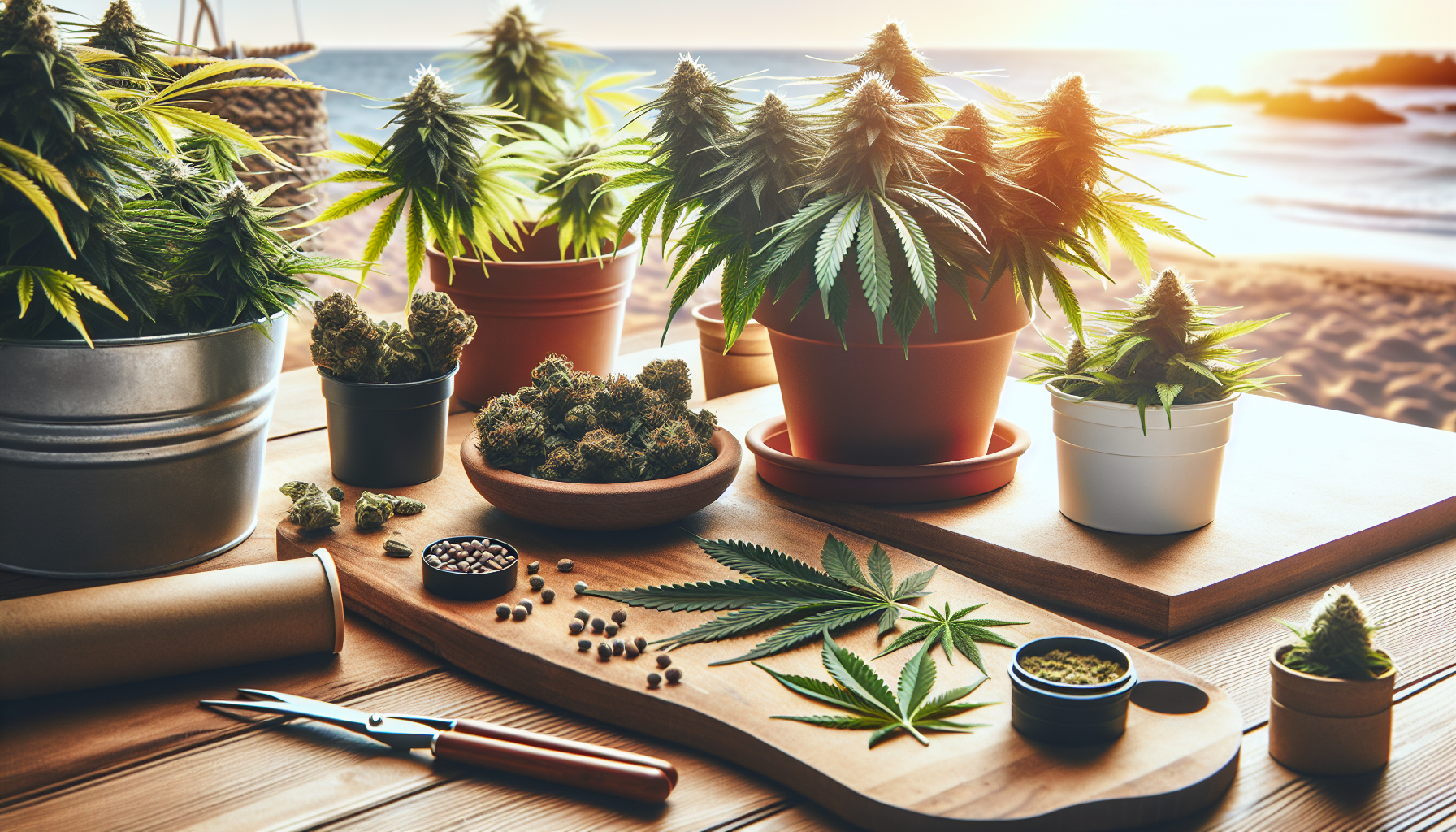
Growing cannabis near the coast can be an exciting and rewarding experience. The maritime climate offers a variety of benefits but also presents certain challenges. In this article, we share our extensive experience and provide valuable tips for successfully growing cannabis by the sea.
Advantages of Growing by the Sea
Growing cannabis near the sea offers some unmistakable advantages. The constant breeze and high humidity in coastal regions can reduce the risk of pest infestations. Additionally, the mild climate provides a longer growing season, which is particularly beneficial for THC seeds.
Climatic Conditions
The moderate temperatures and higher humidity by the sea can positively influence the growth of your plants. In our experience, many strains thrive better as they are less exposed to extreme temperature fluctuations. However, it is important to choose the right strain that harmonizes with these conditions. Autoflowering strains are often a good choice here, as described in our article on autoflowering cuttings.
Challenges of Growing by the Sea
Despite the advantages, there are also challenges. The salty air can have a negative impact on your plants, especially on the leaves. We recommend regularly washing the leaves to avoid salt deposits. More information on proper care can be found in our guide to pruning cannabis.
Soils and Nutrients
The soils in coastal areas are often sandy and nutrient-poor. In our experience, it is advisable to enrich the soil with organic additives such as compost or good topsoil. The correct pH value of the soil is crucial; for cannabis, it should be between 6.0 and 6.8. Further tips on soil preparation can be found in our article on growing cannabis in soil.
Pest Management
A common problem when growing by the sea is pests, which are favored by the humid air. We have found that using companion plants, as described in our article on companion plants for cannabis, is a natural and effective method of pest control.
Avoiding Diseases
The high humidity can also increase the risk of fungal diseases such as Botrytis. Regular inspections and the removal of affected plant parts are essential. More information on detection and treatment can be found in our article on Botrytis in cannabis.
Practical Tips for Successful Cultivation
To maximize the success of your cultivation, you should ensure good air circulation and, if necessary, use fans. Choosing the right strain is also crucial; strains with a short flowering period are often better suited to take advantage of the changing climatic conditions.
Choosing the Right Strain
We recommend choosing robust strains that are adapted to the specific conditions of the sea. Sativa-dominant strains can benefit from the longer sunlight exposure, while Indica strains are more resistant to cooler nights. For an informed decision, read our article on Sativa vs. Indica.
Sources
- Federal Center for Health Education – “Cannabis: Effects and Risks”, 2023
- Max Planck Institute for Plant Breeding Research – “Plant Physiology and Genetics”, 2022
- German Society for Hydroponics – “Effective Plant Nutrition”, 2023
- Research Institute of Organic Agriculture – “Comparison of Organic Fertilizers”, 2022
- Agricultural Chamber of North Rhine-Westphalia – “Climatic Influences on Crop Production”, 2023

About the Author – Ben
Ben has been intensively involved in the cultivation and care of cuttings and the healthy development of plants during the growth phase for several years. His focus lies on low-stress training methods, stable growth conditions, and avoiding common care mistakes. The content is based on practical experience, proven methods, and real observations from daily work with young plants.
Expert contribution & updates: Hannah – Research, contextualization of current methods and observation of new developments.
More about the team behind LeafConnect