Why Proper Cannabis Seed Storage Is So Important
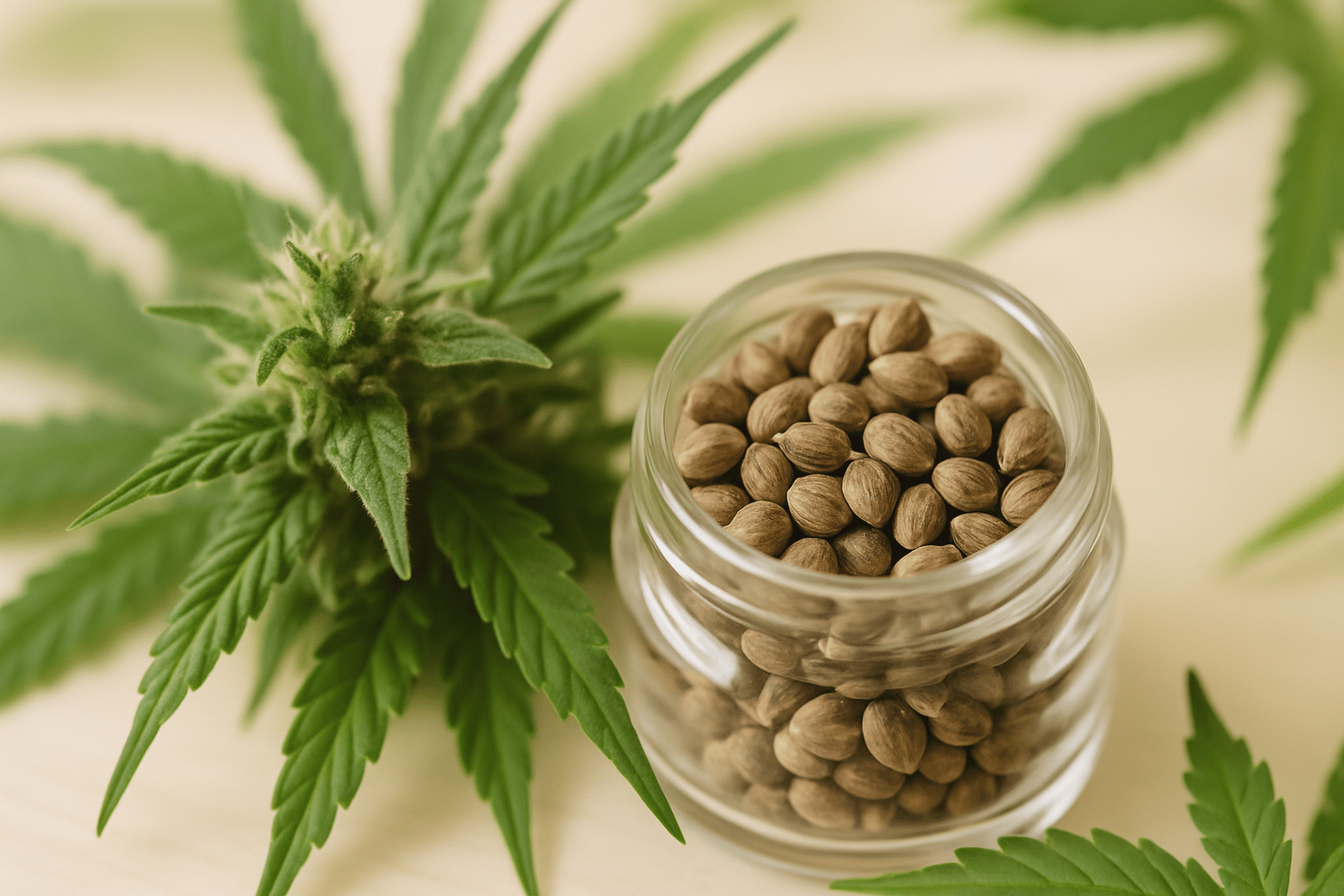
Cannabis seeds are not dead material, but living plant embryos in a dormant state. That is exactly what is often underestimated in practice. If you simply leave seeds in the original packet on a windowsill, in the garage, or in a warm drawer, you risk a gradual decline in germination ability. In our experience, this mistake often only becomes apparent months later: the seeds still look fine on the outside, but germinate irregularly, much more slowly, or not at all.
Three factors are especially critical: temperature, moisture, and light. Heat accelerates aging processes inside the seed, moisture can trigger premature metabolic activity or promote mold, and while light is usually less critical than wetness, it should still be avoided. The more stable these parameters remain, the longer the genetics stay viable. Especially if you want to preserve high-quality varieties or rare lines from the THC seeds category, it pays to work cleanly from the start.
Another point many growers only truly internalize after several runs: it is not just the absolute storage duration that matters, but also the consistency of the conditions. Seeds stored for two years at a constant 6 to 8 °C and low humidity are generally in better condition than seeds stored for only six months while constantly shifting between warm, cold, dry, and humid conditions. Frequent removal, opening, and putting them back is therefore more problematic than many assume.
The Biggest Enemies of Germination Power: Heat, Moisture, Oxygen, and Temperature Fluctuations
Heat is the classic germination killer. The higher the storage temperature, the faster degradation processes take place inside the seed. For short-term storage over a few weeks, room temperature is often still acceptable if the room is dry and dark. For several months or years, however, it is not ideal. We have repeatedly seen seeds from warm living spaces germinate far more unevenly after a year than identical batches kept in cool storage.
Moisture is even more critical. Even moderately elevated humidity inside the container can be enough for the seed coat to absorb moisture. This does not have to lead to visible mold right away. More often, the damage happens invisibly: the seed ages faster, becomes more susceptible to microorganisms, or starts biochemical processes that stop again without true germination conditions. After that, vitality is often irreversibly weakened.
Oxygen also plays a role, although somewhat more indirectly in practice. The tighter and more stable a container is sealed, the less exchange there is with humid ambient air. That protects the seed from fluctuations. Even more important than oxygen itself, however, are temperature swings. If you take seeds straight from the refrigerator into a warm, humid room and open them immediately, condensation can quickly form on the container or even on the seeds. These transitions are exactly the kind of common mistake we keep seeing with stored seed stock.
Optimal Storage Conditions for Cannabis Seeds
For most hobby and home growers, clear target values have proven effective. The ideal is cool, dark, and dry storage. In practice, a range of around 4 to 8 °C works very well if the seeds are packaged dry and protected from light. For medium-term storage over several months, a range around 10 to 15 °C is still workable, as long as humidity stays low and the temperature remains constant.
As for relative humidity inside the storage container, the rule is: as dry as necessary, but without overdoing it with DIY extremes. In our experience, small silica gel packets or other desiccants are very helpful, as long as they are not lying loose directly against the seeds. The goal is not extreme drying to the limit, but a stable, dry microclimate inside the container. By contrast, anyone storing seeds in paper envelopes in a damp basement often sees a noticeable drop in germination rate after just one winter.
Light should be excluded completely. That is easy to achieve: amber glass, lightproof film canisters, small lab tubes, or high-quality storage containers all work well. Even more important, however, is the combination of light protection and airtightness. A dark container that constantly draws in ambient air is less useful than a tightly sealed transparent container that is additionally kept inside a dark box.
| Factor | Recommendation | Why It Matters |
|---|---|---|
| Temperature | 4–8 °C for long-term storage | Slows aging and preserves germination power |
| Humidity | Low, stabilized with desiccant | Prevents mold and premature activation |
| Light | Completely dark | Protects dormancy and reduces stress |
| Container | Airtight, small, clean | Minimizes fluctuations and foreign odors |
| Handling | Open rarely, acclimate slowly | Avoids condensation and temperature shock |
Which Containers Actually Prove Themselves
The best storage environment is of little use if the container is unsuitable. Paper envelopes alone are acceptable for a very short time, but not for longer-term storage. They do not reliably protect against humidity or temperature fluctuations. Better are small, airtight containers holding only a few seeds per variety. That way, you do not have to open your entire reserve every time you only want to remove three or four seeds.
In practice, small screw-top jars with seals, medical sample tubes, high-quality Eppendorf or lab tubes, and film canisters with an additional zip bag have all proven effective. What matters is that the container is clean, dry, and odor-free. Plastic that previously held fertilizer, herbs, or other strongly smelling substances is not a good idea. Seeds are robust, but unnecessary influences should be avoided during long-term storage.
One detail that is often forgotten: labeling. If you store multiple varieties, you should note the strain, purchase date, and ideally also the packaging date. If you later plan to test certain genetics in the garden or greenhouse, clean documentation will save you a lot of trouble. This is especially helpful for seasonal growing, for example if you want to continue after storage with growing cannabis seeds outdoors or selecting robust lines for outdoor use.
Refrigerator, Freezer, or Room Temperature?
For most growers, the refrigerator is the best solution. It provides cool, relatively stable conditions without the risks of deep freezing. Ideally, you should not store the seeds in the refrigerator door, because that is where the strongest temperature fluctuations occur due to frequent opening. A compartment in the back is better, where the temperature remains more constant. Even better is a small, rarely used refrigerator dedicated to garden or grow materials, if available.
Room temperature only makes sense for short periods, for example if you plan to use the seeds within a few weeks or one to two months. Even then, they should still be kept dark, dry, and as cool as possible. In apartments with summer heat, attic rooms, or high humidity, safety quickly declines. In our view, a drawer next to radiators, routers, or kitchen appliances is one of the most common and unnecessary mistakes.
The freezer is often discussed controversially. In theory, very dry and professionally packaged seed stock can remain viable for a long time when deep-frozen. In practice, however, this is error-prone for home growers. If the residual moisture inside the seed is not right or the packaging is not absolutely airtight, cell structures can be damaged. We therefore only recommend deep freezing if true long-term archiving is planned and the process is handled properly with vacuum sealing, desiccant, and controlled handling. For most users, refrigerator storage is the much safer and more practical method for everyday use.
How to Store Cannabis Seeds Properly Step by Step
The most reliable approach is a simple, clean routine. First, check whether the seeds are dry and undamaged. Freshly delivered seeds should not be left lying open unnecessarily. If the original packaging is high-quality and sealed, it can often be placed inside an additional secondary container. If the packaging is only a simple zipper bag or paper envelope, transfer it into a small airtight container.
Place a small desiccant packet in the outer container, but not loose among the seeds. Then label everything clearly and put the container in a dark box or directly into the refrigerator. Important: do not keep checking on them. Every unnecessary access introduces new air, new moisture, and new temperature fluctuations into the system.
- Check seeds for visible damage, cracks, or mold.
- Store varieties separately and with clear labels.
- Choose a small airtight container.
- Add desiccant without direct contact with the seeds.
- Store cool and dark, ideally at 4–8 °C.
- When removing, let the container reach room temperature before opening it.
The last point is crucial. Take the container out of the refrigerator and let it acclimate unopened for a few hours. Only then open it. This prevents warm room air from condensing inside the cold container. In practice, this small step often makes the difference between stable long-term storage and gradual quality loss.
How Long Do Cannabis Seeds Remain Viable?
The honest answer is: it depends on genetics, maturity at harvest, and storage conditions. Under good conditions, cannabis seeds often remain viable for several years. In our experience, 2 to 5 years is realistic with proper refrigerator storage, and often longer. That does not mean, however, that the germination rate stays identical the entire time. It usually declines slowly, and older seeds tend to germinate more unevenly.
Shelf life is much shorter under poor storage conditions. Seeds kept in damp rooms, summer heat, or changing environments can lose performance after just 6 to 12 months. This often shows up not only in fewer seedlings, but also in weaker starts: slow root formation, delayed emergence of the cotyledons, and higher losses in the first few days.
A common misconception is that large, dark seeds are automatically long-lasting. Appearance is only a rough indicator. Even seeds that look perfect externally may have aged internally. If you want to use older seeds, plan for a bit more reserve and work especially cleanly during germination. After that, it is worth keeping the young plants stable from the start, for example with a clean climate, suitable light, and a consistent watering rhythm. Our in-depth articles on cannabis lighting and watering cannabis properly are a good follow-up.
Typical Mistakes in Seed Storage
Probably the most common mistake is storing seeds in unsuitable everyday places: kitchen cupboards, windowsills, cars, garden sheds, or attics. These places seem practical, but are almost always problematic. Cars and garden sheds in particular experience extreme temperature peaks. A few hot summer days can be enough to noticeably age sensitive batches.
Another widespread mistake is repeatedly opening a large seed reserve. Anyone storing 20 or 30 seeds of one variety in a single container and opening it for every sowing repeatedly exposes the entire batch to moisture and temperature fluctuations. It is better to divide them into smaller portions. We have made it a habit to split valuable genetics into small units so that only what is actually needed gets opened.
Another mistake is excessive ambition when drying. Some growers place seeds together with aggressive desiccants in containers that are too small or improvise vacuum solutions that do more harm than good. Stable and clean beats complicated. If you want to preserve seed stock for longer, a controlled, simple storage chain is almost always better than experimental extremes.
Successfully Germinating Older Seeds: What Is Still Possible
Older seeds are not automatically lost. If they were stored correctly, good results are often still possible. But expect them to need more time. While fresh, vigorous seeds often show first activity within 24 to 72 hours, older specimens can react much more sluggishly. Patience matters more here than actionism.
What we do not recommend for older seed stock: rough methods such as scarifying without experience, soaking for many days, or heavily dosed additives. These measures are often sold online as miracle solutions, but in practice they frequently lead to rot or oxygen deficiency. A better approach is a clean, moderately moist germination environment, stable temperatures around 22 to 25 °C, and a little more time. If nothing happens after a reasonable period, the problem is usually not a lack of “kick-start,” but vitality that has already been lost.
Anyone who regularly works with older seed stock should generally document which batches still perform well and which do not. Over time, this gives you a realistic picture of the shelf life of different lines. That is especially valuable if you want to preserve certain genetics specifically for future projects, outdoor seasons, or selections.
When Seed Storage Makes Sense – and When Clones Are the Better Choice
Seeds are ideal if you want to preserve genetics in reserve, test different varieties, or stay flexible long term. They take up little space, can be preserved relatively easily with proper storage, and are the simplest entry point for many growers. Especially for seasonal projects or if you want to start later, properly stored seed stock is a very practical backup.
Clones, on the other hand, make sense if you want to preserve one specific, already proven plant exactly as it is. Seeds always bring a certain amount of variation, even within one line. So if you want to preserve not just germination power but a very specific mother line, seed stock is not the perfect solution. In that case, stable, healthy clones or a well-maintained mother plant are often the better strategy. Our articles 5 good reasons to use clones instead of seeds and Keeping cannabis mother plants – how to preserve genetics long term are a good match here.
In practice, many experienced growers work with both: seeds for new selections and genetic backup, clones for reproducible runs. This combination is often the most sensible if you want to stay flexible on the one hand and consistently repeat proven quality on the other.
Sources
- Royal Botanic Gardens, Kew – “Seed Information Database: Seed Storage Behaviour”, 2024
- FAO / International Plant Genetic Resources Institute – “Genebank Standards for Plant Genetic Resources”, 2014
- Copeland, L. O.; McDonald, M. B. – “Principles of Seed Science and Technology”, 2001
- Bewley, J. D.; Bradford, K.; Hilhorst, H.; Nonogaki, H. – “Seeds: Physiology of Development, Germination and Dormancy”, 2013
About the Author – Ben
Ben has been intensively involved in the cultivation and care of cuttings and the healthy development of plants during the growth phase for several years. His focus lies on low-stress training methods, stable growth conditions, and avoiding common care mistakes. The content is based on practical experience, proven methods, and real observations from daily work with young plants.
Expert contribution & updates: Hannah – Research, contextualization of current methods and observation of new developments.
This article was created with AI support and editorially reviewed.
More about the team behind LeafConnect