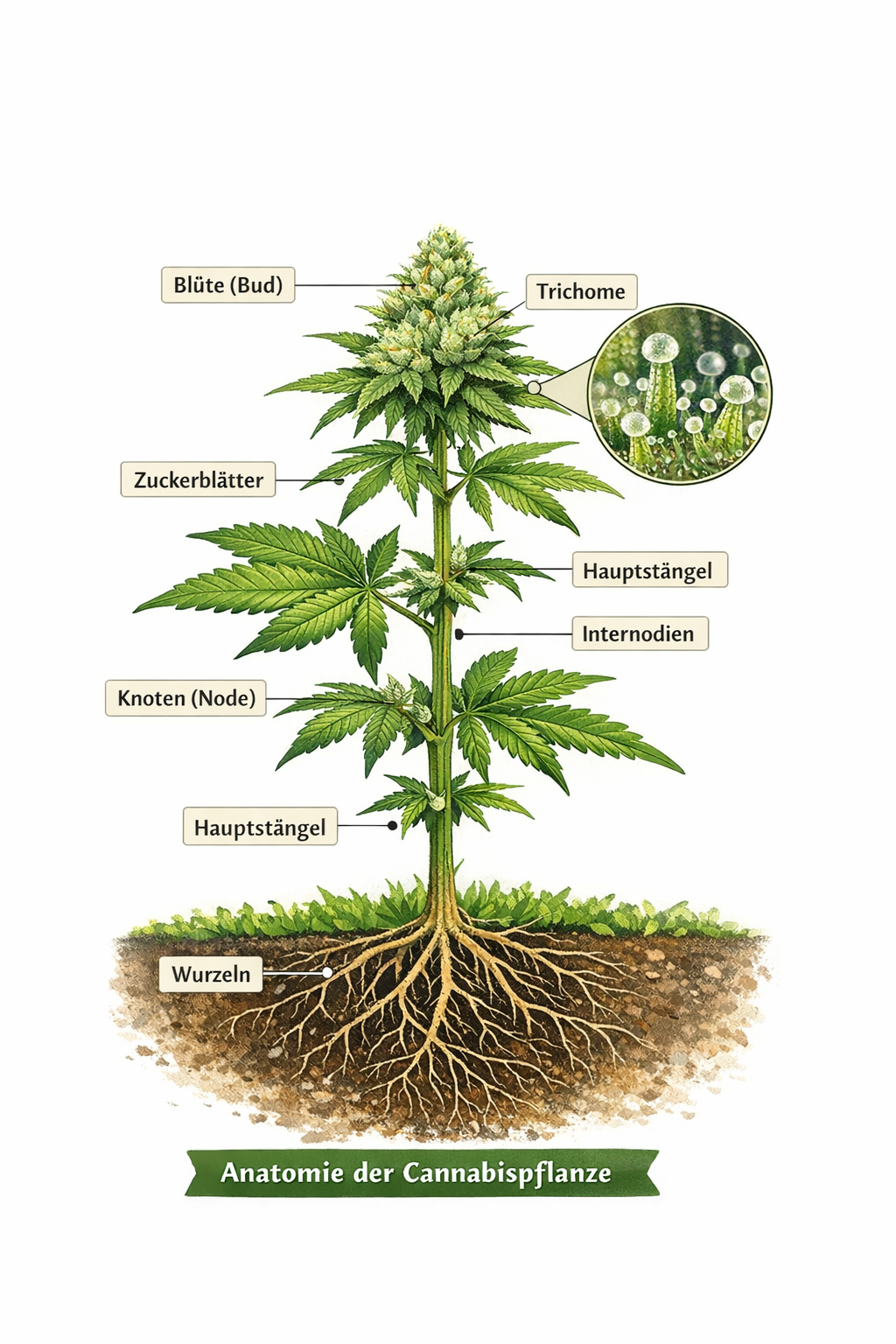
Maintaining and Caring for Cannabis Mother Plants: Basics for Stable Clone Production
Cannabis mother plants are the cornerstone of a consistent and predictable cultivation. A healthy mother plant provides you with uniform clones over time, ensuring continuous growth and consistent results. Maintaining such a mother plant requires a fundamental understanding of conditions, care, and observation.
What is a Cannabis Mother Plant?
A mother plant is a selected female plant kept permanently in the vegetative phase to regularly produce genetically identical clones. It is not flowered for harvest but used for clonal propagation, serving as a reliable genetic bank for your crops.
Why Mother Plants Are Important
With a consistent mother plant, you can take uniform clones over a long period instead of constantly germinating new seeds. This means:
- genetic consistency among plants,
- higher survival rate and development speed for clones,
- simplified planning of growth cycles and harvest times.
Basic Care of a Mother Plant
To ensure the mother plant produces vital clones long-term, stable conditions are crucial. This includes light, climate, nutrient supply, and healthy structure.
Light & Photoperiod
Mother plants remain permanently in the vegetative phase. This means a longer light period (e.g., 18/6 hours light/darkness) supports constant growth and stable formation of new shoots.
Climate & Environment
A consistent climate with temperatures between approximately 20°C and 25°C and moderate humidity ensures robust development. Good air circulation reduces stress factors like mold and strengthens defenses.
Nutrients & Watering
Mother plants require a balanced nutrient supply scheme—similar to the general vegetative phase, with a focus on nitrogen to promote healthy foliage and strong shoots. Too weak or too strong fertilization can lead to deficiencies or stress reactions.
Training & Structure
Targeted plant training such as regular pruning, bending, or defoliation helps maintain the plant’s shape and create an even shoot structure. This facilitates later cutting of clones and reduces unnecessary stress.
Harvesting Clones from the Mother Plant
About two weeks after your mother plant grows stably and forms strong shoots, you can start regularly taking clones. Be careful not to take too many at once, and give your mother enough time to recover between harvests.
Find everything about successfully accompanying and caring for clones in the guide: Successfully Growing Cannabis Clones.
Differences Between Mother Plant, Clone, and Flowering
While clones often switch to the growth or flowering program shortly after rooting, a mother plant remains permanently in the vegetative phase, without entering flowering. This means it continuously forms new shoots and refrains from developing large flower clusters.
Common Care Mistakes and How to Avoid Them
Even experienced growers can make typical mistakes. These include:
- too frequent interventions or too severe pruning without recovery time,
- excessive fertilization or nutrient deficiency,
- unstable climate or temperature fluctuations during the continuous light cycle.
A structured care approach reduces stress and increases the lifespan and vitality of your mother plant.
Frequently Asked Questions About Mother Plant Care
How long can a mother plant be kept?
With optimal care, mother plants can remain stable for several months to over a year before a replacement plant is advisable. Health status and development rate are key indicators here.
How often should clones be taken?
After each harvest, the mother plant should rest for at least two weeks before further clones are cut to avoid stress and growth losses.
Where can I find answers to organizational processes?
Answers to shipping, delivery, and general questions can be found in our FAQ.
Further Resources
In-depth information on clones, genetics, and plant care can be found in our Cannabis Literature, which provides practical and scientifically based insights into the most important topics.

About the Author – Ben
Ben has been intensively involved in the cultivation and care of cuttings and the healthy development of plants during the growth phase for several years. His focus lies on low-stress training methods, stable growth conditions, and avoiding common care mistakes. The content is based on practical experience, proven methods, and real observations from daily work with young plants.
Expert contribution & updates: Hannah – Research, contextualization of current methods and observation of new developments.
More about the team behind LeafConnect