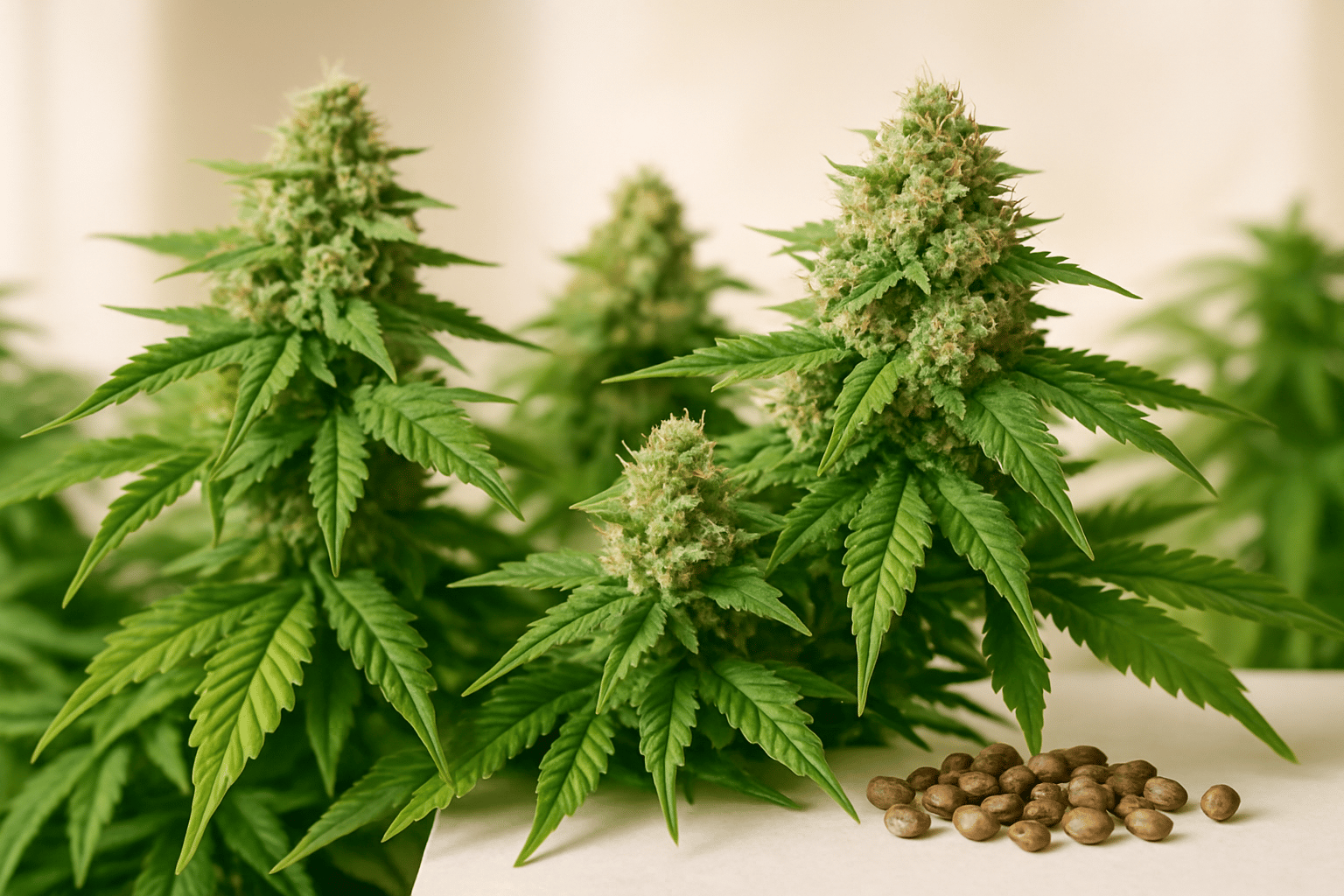
Why proper cannabis storage matters so much
Many growers invest weeks or months into genetics, climate control, nutrient management, and harvest timing—only to lose quality within a few weeks through poor storage. We see this constantly in practice: buds are kept too warm, too dry, too humid, or simply stored in unsuitable containers. The result is flat aromas, harsh smoke, declining potency, and in the worst case, microbial spoilage.
After harvest, cannabis is not a stable product. Cannabinoids and terpenes react to oxygen, light, temperature, and moisture. Under unfavorable conditions, THC degrades over time, sensitive monoterpenes dissipate quickly, and excessive residual moisture creates ideal conditions for mold. Good storage is therefore not a minor detail, but the final critical processing step after drying and curing.
In our experience, the most common misconception is: “If it’s dry enough, it’s fine.” That is only partly true. Overly dry flowers lose structure and flavor, while overly moist flowers can turn microbiologically unstable. Good storage means keeping the flower within a narrow range where aroma, consistency, and safety all align.
The four decisive factors: light, temperature, oxygen, and moisture
If you want to store cannabis properly, you need to control four variables. Light—especially UV exposure—accelerates the breakdown of sensitive compounds. That is why flowers should never be kept permanently on windowsills, in transparent jars exposed to sunlight, or under bright room lighting. Even attractive display storage in glass only makes sense if the jar is kept in the dark.
Temperature is the next major lever. The warmer it is, the faster degradation processes occur and the more terpenes evaporate. For most households, a range of around 15 to 21 °C is practical. Anyone storing well above that—such as in attic apartments reaching 25 to 30 °C in summer—will noticeably accelerate aging. In our experience, highly terpene-rich cultivars age especially quickly under such conditions.
Oxygen promotes oxidation. That does not mean every flower needs to be vacuum sealed, but too much headspace in the container is unnecessary. A half-empty large jar is worse than a properly filled smaller one. At the same time, flowers should not be compressed so tightly that trichomes are mechanically damaged. The goal is minimal air exchange, not pressure.
Relative humidity inside the container is the most critical point. For dried and properly matured flowers, the sensible target range is usually 58 to 62% relative humidity. Below about 55%, buds often become brittle, lose aroma faster, and smoke more harshly. Above about 65%, the risk of mold rises significantly, especially if the flowers have not dried thoroughly all the way through.
| Factor | Optimal range | Typical problem when outside range |
|---|---|---|
| Light | Store in the dark | Breakdown of THC and terpenes |
| Temperature | 15–21 °C | Faster aging, aroma loss |
| Humidity | 58–62% RH | Too dry: harsh and bland; too humid: mold risk |
| Oxygen | Minimal headspace | Oxidation and quality loss |
Only properly dried cannabis should be stored
Storage does not begin once the buds are in the jar, but immediately after harvest. Anyone packaging too early traps residual moisture—and that is exactly what leads to musty odors, chlorophyll-heavy notes, or Botrytis and mold issues. Anyone drying too long or too aggressively may preserve a safe product, but often one that is sensorially depleted. That is why drying is the foundation of every good storage strategy. You can read more in our article Harvesting cannabis: The right timing, clean technique, and maximum quality.
A practical drying window is usually 7 to 14 days at around 16 to 20 °C and 55 to 60% relative humidity, with gentle air movement but no direct airflow onto the flowers. In our day-to-day grow work, we have found that drying too quickly—such as at 24 °C with dry heating air—causes the outer tissue to dry too fast while moisture remains inside. The flower then appears “finished” on the outside, but humidity rises again later in the jar.
A simple practical check is the behavior of smaller branches: when bent, they should snap rather than merely fold over softly. This does not replace a hygrometer in the jar, but it is a good first indicator. After storage begins, humidity inside the container should be monitored during the first 24 hours. If it rises clearly above 62 to 65%, the material was still too moist and needs to come back out of the jar.
If you had mold issues in late flowering or after harvest, it is also worth reading Botrytis in cannabis: Causes, identification, and control. Not every spoiled flower immediately shows obvious white fuzzy growth—sometimes the first sign is simply a dull, hay-like, or ammonia-like smell in the container.
Which containers are actually suitable
For most applications, airtight glass jars with a wide opening are the best choice. They are flavor-neutral, easy to clean, free from static issues, and do not release foreign odors. Amber glass or clear glass kept protected in a dark cabinet is ideal. Plastic containers only work to a limited extent. Low-quality plastics can absorb or release odors, and with frequent opening they can electrostatically attract trichomes—not a disaster, but an unnecessary quality loss.
Metal containers can work if they are internally coated with a neutral lining and truly airtight. For many home growers, however, they are less practical because you cannot see the condition of the flowers and humidity is harder to monitor. Bags are fine for short-term transport, but only a second-choice option for longer storage—especially if they are not odor-proof or not sufficiently sturdy.
One mistake we often see is huge mason jars for small leftover amounts. Several smaller containers are better, each leaving only as much headspace as necessary. This reduces oxidation and prevents the entire supply from being opened constantly. Anyone storing different batches or phenotypes should also label them clearly: strain, harvest date, storage date, and ideally any curing notes. That saves a lot of guesswork later.
How to control the right humidity in the jar
A small digital hygrometer in the container or in a test jar is one of the most useful tools you can have. It costs little and prevents expensive mistakes. After filling, relative humidity should be observed over 12 to 24 hours. If it remains stable between 58 and 62%, the material is in a good range. At 63 to 65%, caution is advised: with very dense buds this can still be okay, but it should be monitored closely. Anything above that is too risky for long-term storage.
Humidity-control packs can help offset fluctuations. But they are not a rescue solution for poorly dried material. That is a common misunderstanding. A 62% pack does not turn overly wet flowers into a safe batch. It only stabilizes a range if the starting material is fundamentally suitable. In our experience, such packs work best with cannabis that has already been properly dried and cured, and that loses some moisture in everyday use through frequent opening.
Overly dry buds can be rehydrated to a limited extent, but lost terpenes do not come back. That is why prevention matters more than later correction. Anyone who accidentally dries flowers below 50% RH can improve texture with a humidity pack, but the original aroma profile will usually remain diminished. That is exactly why careful control during the first days of storage is far more worthwhile than any later “rescue measure.”
Short-term, medium-term, and long-term storage
For an everyday supply that will be used within the next days or weeks, a well-filled jar in a dark, cool cabinet is sufficient. The main priority here is not leaving the container open unnecessarily. Frequent opening introduces oxygen and humidity fluctuations into the system. Anyone who consumes regularly is better off using a smaller day-use container and keeping the main supply stored separately.
For medium-term storage over several months, consistency becomes more important than perfection in any single detail. A cabinet in an interior room with minimal temperature fluctuation is usually better than a basement with high humidity or a kitchen with heat and odors. Cannabis does not magically absorb surrounding smells through glass, but frequently opened containers in strongly scented environments are still not a good idea. This is especially true for cultivars with delicate, volatile terpene profiles.
For longer storage beyond six to twelve months, temperature, light, and air exchange should be managed very deliberately. In our experience, quality and potency are preserved much better when batches are divided into several small, tightly sealed jars that are only opened when needed. That way, the entire supply does not age every time you remove a few grams.
Should cannabis be stored in the refrigerator or freezer?
This topic is often debated. For most home growers, the refrigerator is not a standard recommendation. The reason is not the cold itself, but condensation and frequent temperature fluctuations when taking containers in and out. When a cold container enters warm room air, moisture can condense—and that is exactly what you do not want on the flowers or inside the container.
If someone needs to store very large quantities professionally and move them only rarely, cool storage in stable, truly airtight containers can make sense. In a normal household, however, we see more problems than benefits: the door is opened often, food odors are present, temperature fluctuates, and the container is constantly moved in and out. For most users, a dark, cool cabinet is the more robust solution.
We generally advise against using the freezer for ready-to-consume flowers, except in specialized setups. Frozen trichomes become mechanically very fragile. Even slight movement can break off resin heads. Then there is the condensation issue again during thawing. Anyone freezing needs a process that truly protects the material airtight and keeps it sealed during tempering until everything has reached room temperature. For everyday use, that is unnecessarily prone to error.
Preserving smell, aroma, and potency: what experienced growers pay attention to
The aroma of cannabis depends primarily on terpenes and other volatile companion compounds such as certain cannabis flavonoids. Many of these compounds are even more sensitive than THC itself. That is why a flower may still feel “strong” while its aroma has long since degraded significantly. This is often the reason older material still has effects, but tastes flat, dusty, or hay-like.
Another point is strain dependency. Very gassy, fruity, or citrus-forward profiles with a high proportion of volatile monoterpenes lose expression faster under poor storage than heavy, earthy, or spicy lines. In our experience, Haze, citrus, and tropical profiles age the fastest sensorially when stored too warm. Kush- or Skunk-dominant varieties often seem somewhat more robust, but benefit just as much from good storage.
Anyone wanting to reduce odor in the household should not rely on improvised solutions, but on truly airtight containers. You can find more on odor control around cultivation, harvest, and storage in the article Understanding cannabis odor: Causes, influencing factors, and practical tips for cultivation, harvest, and storage. The key point is this: odor-proof does not automatically mean quality-preserving if temperature and humidity are not right.
Common mistakes when storing cannabis
The biggest mistake is storing flowers with too much residual moisture. This often happens after drying that appears dry on the outside but is still moist inside. Typical warning signs are a rapid rise in humidity in the jar, a dull smell, or the feeling that the buds have become noticeably softer again the next day. In that case, you should react immediately, spread the material out, and let it dry further.
The second common mistake is over-drying. Many growers leave flowers exposed for too long out of fear of mold or store them in unsuitable containers without any humidity buffer. The result is often harsh smoke and a loss of nuance in flavor. The flower may seem “safe,” but no longer high quality.
Third, we often see unnecessary stress from constant handling. Buds are repeatedly poured out, sorted, shown around, or checked. Every mechanical movement costs trichomes. Anyone aiming for maximum quality handles flowers as little as possible and uses clean tools or gloves when moving larger amounts.
Another mistake is storage in unsuitable places: bathrooms because of humidity, kitchens because of heat and odors, cars because of extreme temperature swings, attics because of summer heat. Good storage is boring—and that is exactly why it works: dark, undisturbed, cool, and stably dry.
Practical routine for home growers: how we store matured flowers
After drying, we trim the flowers cleanly and fill them into appropriately sized jars. During the first days after storage begins, we check relative humidity at least once a day. If it is still a bit too high, we do not simply leave the jars closed—we adjust. Especially with dense tops, internal residual moisture can migrate outward with a delay.
During the maturation phase, we vent more frequently at first, then much less often later. Once the batch is stable, we no longer treat the jar like a project, but like a storage container. In our view, excessively frequent “burping” over weeks is a typical beginner mistake. If humidity is right, constant opening introduces more oxygen than benefit. Anyone wanting to dive deeper into the maturation phase should read our article Curing cannabis: How aroma, effects, and quality mature properly.
For everyday use, we divide larger harvests into several batches: one small jar for current use, while the rest stays sealed. This simple separation noticeably extends quality. We also label every batch clearly. This is especially useful if you cultivated different genetics from THC seeds or THC clones in parallel and later want to compare how individual varieties develop during storage and maturation.
How to tell when stored cannabis is no longer okay
You should be suspicious of musty, cellar-like, ammonia-like, or sharply fermented smells. Properly stored cannabis smells resinous, fruity, spicy, earthy, or gassy depending on the variety—but not stale and damp. Visible white or gray growth, unusually soft spots in the bud, or fine dusty structures inside are clear warning signs. If in doubt, do not consume it.
Even without visible mold, a batch may have degraded significantly in quality. If the flower is extremely dry, aromatically empty, and feels almost papery when broken up, it is not automatically spoiled, but it is often far removed from its original level in sensory terms. Potency loss happens gradually and is often underestimated. Especially during long, warm storage, the effect often shifts from clear and cultivar-typical to duller and less nuanced.
If you have medically sensitive individuals in the household or are unsure about a batch, safety should always come first. Do not “smoke up” suspicious flowers, do not process them into edibles, and do not mix them with healthy material. If mold is suspected, disposal is the sensible decision.
Sources
- United Nations Office on Drugs and Crime – “Recommended methods for the identification and analysis of cannabis and cannabis products”, 2009
- National Center for Biotechnology Information / PubChem – “Tetrahydrocannabinol (THC) Compound Summary”, 2024
- Hazekamp, A. – “The Trouble with CBD Oil”, 2018
- Small, E. – “Cannabis: A Complete Guide”, 2016

About the Author – Hannah
Hannah focuses on researching, contextualizing, and observing current developments in plant care and modern cultivation techniques. Her focus lies on new methods, optimizing growth conditions, and making complex topics accessible. Her content complements practical experience with analysis, updates, and a keen eye on emerging trends.
Content is regularly reviewed and updated.
This article was created with AI support and editorially reviewed.
More about the team behind LeafConnect