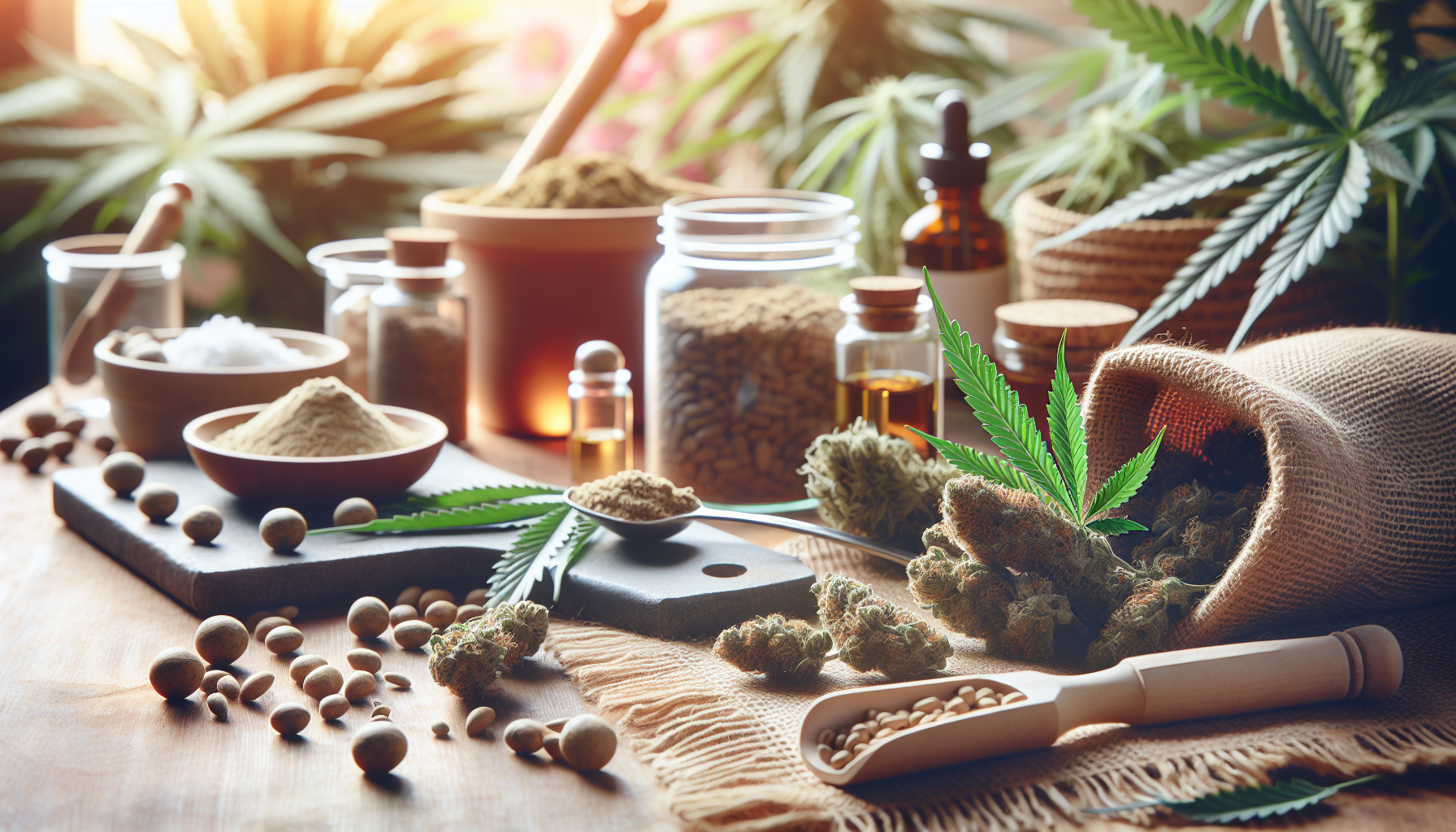
Decarboxylating cannabis, often done simply in a home oven, is the crucial step to unleash the full effect of THC and CBD for edibles or extracts. This guide shows you how to perfectly calibrate temperature and time while avoiding common mistakes, so that activating your weed works every time.
What Decarboxylation Actually Means for Cannabis
Anyone who wants to eat cannabis, infuse it into oil, or turn it into butter cannot avoid decarboxylation. Fresh or merely dried cannabis does not contain most of its cannabinoids in the “active” form, but rather as acids: THCA instead of THC, CBDA instead of CBD. Only heat transforms these precursors into what most consumers actually want to use. Chemically, a carboxyl group is split off in the process, which is why it is called decarboxylation.
In practice, this simply means: without proper heating, a large part of the plant’s potential remains unused. This is one of the most common mistakes we see with homemade edibles. Many people add flowers directly to butter or batter and then wonder why the effect is weak or inconsistent. The problem is rarely genetics alone, but almost always imprecise handling of temperature, time, and material moisture.
It is also important to understand that decarboxylation is not a switch with only two states. It is a process window. Too little heat activates cannabinoids only partially. Too much heat degrades THC further, promotes oxidation, and can significantly reduce terpenes. That is exactly why it pays to work precisely instead of improvising with “just 150 degrees for ten minutes.”
Why Decarboxylation Is So Crucial for Edibles, Oils, and Tinctures
When smoking or vaporizing, heat handles most of the activation within seconds. With edibles, that step is missing. So if you want to make cannabutter, MCT oil, capsules, or baked goods, you need to complete the activation beforehand or during a controlled heating process. In our experience, separate decarboxylation is almost always the more reliable method because it separates two processes: first activate, then extract.
Especially with THC-containing products, this makes a massive difference in predictability. Properly decarboxylated material delivers a much more reproducible effect from the same starting amount. This is particularly important for beginners, who should build their dose slowly and carefully. If you want to learn more about potency and a cautious introduction, LeafConnect also has a suitable article at A Cautious Start: The Perfect THC Content for Beginners.
The same applies to CBD products, just with a different goal. CBDA has properties of its own, but many users specifically want CBD in its activated form. Here too, precise temperature control determines whether the result is mild and manageable or whether active compounds are lost unnecessarily. Those working with CBD-rich plants often start with suitable genetics, for example from the CBD Clones category.
The Most Important Factors: Temperature, Time, Moisture, and Material Quality
The two main variables are temperature and time. Lower temperatures over a longer period generally preserve terpenes better and reduce the risk of degrading THC unnecessarily. Higher temperatures shorten the process but significantly increase the risk of error. In our experience, a household oven is absolutely workable, but only if you know its actual temperature. Many ovens run 10 to 20 degrees off. A small oven thermometer costs little and prevents a lot of frustration.
Residual moisture in the material also plays a bigger role than many people think. Very fresh or poorly dried flowers behave differently from properly cured material. Moist plant matter first needs energy to drive off water before the actual decarboxylation can proceed evenly. This can lead to too much heat on the outside while the inside is still not fully activated. That is why dry, well-cured flowers allow for much more precise processing.
The quality of the starting material is equally crucial. Poor flowers do not become better through decarboxylation. If the harvest was cut too early, developed mold, or was stressed during flowering, the final product will suffer as well. Anyone who wants to better understand how resin production, maturity, and quality are controlled on the plant itself should read the article Cannabis Flowering Stage: How to Control Yield, Resin Production, and Quality.
Proven Temperature Ranges for THC- and CBD-Rich Cannabis
For THC-dominant material, a range of about 105 to 120 °C has proven effective in practice. A very solid starting point is 110 to 115 °C for 35 to 45 minutes with loosely broken-up, dry flowers. This is not a law of nature, but a practical window in which many home devices work reliably. We have had good results starting at the lower end when the material is especially terpene-rich or will later be heated longer in fat or oil.
CBD-rich material is often decarboxylated a little longer because CBDA reacts somewhat more slowly to heat than THCA. Typical parameters are 110 to 120 °C for 45 to 60 minutes. Here too, the rule is: controlled and even is better than aggressive. If you are working with mixed chemotypes, such as 1:1 strains, a moderate middle ground is usually best.
A common misconception is that “more heat means more effect.” The opposite is often true. THC is not infinitely heat-stable. If treated too long or too hot, degradation into CBN and other breakdown products increases, and the effect profile shifts. Subjectively, this can feel more sedating and dull. That may be desirable for some applications, but not for most edibles.
| Application | Temperature | Time | Practical note |
|---|---|---|---|
| THC-dominant flowers | 110–115 °C | 35–45 min. | Good standard range for edibles and oils |
| CBD-dominant flowers | 110–120 °C | 45–60 min. | Slightly longer time for even activation |
| Kief or fine resin | 100–110 °C | 25–35 min. | Spread thinly, as fine material reacts faster |
| Already very dry material | 105–110 °C | 30–40 min. | Work gently to limit terpene loss |
Decarboxylating Cannabis in the Oven: The Proven Practical Method
For most home growers and DIY processors, the oven is the most practical solution. If you work cleanly, the result is absolutely sufficient. Break up the flowers only coarsely. A common beginner mistake is grinding the material too finely. This unnecessarily increases the surface area, causes more aroma loss, and raises the risk that small particles will overheat more quickly. Coarse pieces roughly the size of peas to small beans are usually ideal.
Place the material loosely on a baking tray lined with parchment paper or in a shallow, oven-safe glass dish. Do not stack it and do not compress it. An even layer height matters more than many people think. If you place a second sheet of parchment paper or a loose layer of aluminum foil over it, volatile aroma compounds are preserved slightly better and the smell is reduced. However, it should not be completely airtight in the oven, because moisture needs to escape.
Preheat the oven to the actual target temperature and only then put the material inside. In our experience, the first ten minutes are crucial: if the oven fluctuates heavily during this phase, the result will be uneven. Halfway through the time, you can gently turn the material once. By the end, it should be dry, slightly crumbly, and clearly aromatic, but not dark brown or smelling burnt.
Step by Step at Home
- Dry the flowers properly and break them up coarsely.
- Preheat the oven with a thermometer to 110 to 115 °C.
- Spread the material loosely and evenly on the tray.
- Heat for 35 to 45 minutes, depending on moisture and material density.
- After about 20 minutes, gently move or turn it once.
- Remove from the oven and let it cool completely.
- Then process it immediately or store it airtight, dark, and cool.
If you want to make butter afterward, the next logical step is a fat with good cannabinoid binding. LeafConnect provides a detailed guide at How to Make Cannabutter. The combination of proper decarboxylation and controlled fat infusion delivers significantly better and more reproducible results than improvised baking with raw plant material.
Alternative Methods: Jar in the Oven, Sous Vide, and Devices
A very practical alternative is decarboxylation in a sealed screw-top jar or preserving jar in the oven. The advantage is less odor and slightly better retention of volatile terpenes. The disadvantage is that heat transfer is slower, and you need to work carefully to avoid thermal shock. The jar should be heat-resistant, not filled to the brim, and only opened after cooling. For many people, this is the best method when discretion matters.
Sous vide is technically elegant, but not always necessary in everyday use. In this method, the material is vacuum-sealed and heated in a precisely controlled water bath. The major advantage is very accurate temperature control. The downside is the greater effort involved, and not every vacuum-sealing material is ideal for every temperature and duration. Those who process frequently and value reproducibility can achieve very good results with it.
Special decarb devices also work well, especially when they regulate temperature and time accurately. They are particularly worthwhile for users who regularly process small to medium quantities. For occasional batches, however, a good oven is entirely sufficient. What matters is not the most expensive device, but process control.
Typical Decarboxylation Mistakes and How to Avoid Them
The most common mistake is excessive temperature. Many household ovens are inaccurate, and anyone who blindly trusts the display can easily end up at an actual 125 to 140 °C. The kitchen may smell intense, but some of the valuable compounds have already been lost unnecessarily. So: always use an oven thermometer and set temperatures conservatively.
Mistake number two is uneven material. Trying to decarboxylate large, dense buds that are dry on the outside and still moist inside almost always leads to inconsistent results. Break them up coarsely, spread them evenly, and do not form piles. The same applies to trim or smaller sugar leaves: do not mix everything indiscriminately if you expect reproducible effects. Flowers, trim, and kief differ significantly in potency and in how they behave under heat.
Another point is the wrong expectation regarding color. Many people believe the material must brown heavily. In reality, a slight deepening of color from green to olive or light brown is often enough. Dark, dry, almost toasted material is usually a warning sign. Another common mistake we see among growers is trying to “save” poor raw material in the kitchen. If the plant already had problems during cultivation, such as mold or pest pressure, the material should not simply be processed further. For prevention, it is worth reading Botrytis in Cannabis, because infected flowers do not belong in edibles.
Calculating Potency: How Strong Will the Final Product Really Be?
Anyone decarboxylating cannabis should be able to do at least rough calculations. This helps prevent overdosing. A simple example: 10 g of flowers with 20 % THCA theoretically contain around 2000 mg THCA. When converting to THC, you have to account for the different molecular mass. In practice, a rough factor of 0.877 is used. So 2000 mg THCA theoretically becomes about 1754 mg THC. In reality, there are also process losses from heat, handling, and extraction.
For home use, it makes sense to calculate with 70 to 85 % overall efficiency, depending on the method and level of care. In our example, that would leave perhaps 1225 to 1490 mg THC in the finished fat or oil. If that yields 50 servings, one serving contains roughly 24 to 30 mg THC. For many beginners, that is already far too strong. That is why we recommend making small test batches and planning portions more in the range of 2.5 to 5 mg THC if there is no prior experience.
Genetics naturally make a major difference here. Whether a strain is THC-heavy, CBD-rich, or balanced determines the starting point for every calculation. Anyone who wants to choose suitable strains more deliberately will find helpful guidance in the article Sativa vs. Indica: What Really Matters as well as in the THC Seeds category for selecting suitable starting genetics.
Odor, Storage, and Further Processing After Decarboxylation
Decarboxylation smells. Anyone who underestimates that will quickly end up with a very noticeable odor cloud throughout the home. In practice, three things help: a jar instead of an open tray, good kitchen ventilation, and direct further processing in a closed system, such as butter, oil, or a tincture. It will never be odorless, but it becomes much more controllable.
After heating, the material should cool completely before being processed further or packaged. Putting warm cannabis into a sealed container can trap residual moisture and unnecessarily alter the aroma. For short-term storage, airtight jars in a dark, cool place are sufficient. For longer storage, the same rule applies as with flowers in general: oxygen, light, and heat are the biggest enemies of quality.
If you grow your own, good post-harvest processing begins before the kitchen. A clean harvest, proper drying, and correct curing all help determine how well the material can later be decarboxylated. If you are still working on the basics, the Grow Guide from LeafConnect offers many practical fundamentals for stable, high-quality harvests.
When You Should Be Especially Careful
Edibles take effect with a delay and often last longer than inhaled cannabis. That is exactly why decarboxylation is not just a technical kitchen step, but also a matter of responsibility. If activation is done well, you may end up producing very potent foods. These must be clearly labeled, stored safely away from children, and never confused with normal snacks.
Particular caution is required for people without experience, when combining with alcohol or other substances, and for individuals with pre-existing health conditions. In practice, we always recommend: start low, wait at least 2 hours, and do not redose out of impatience. Anyone aiming for medical use or feeling unsure should seek medical or pharmaceutical advice instead of relying solely on kitchen recipes.
Legally, of course, you should only act within the framework of the laws applicable in your jurisdiction. LeafConnect provides information on genetics, cultivation, and processing, but does not replace individual medical or legal advice.
Sources
- United Nations Office on Drugs and Crime – “Recommended Methods for the Identification and Analysis of Cannabis and Cannabis Products”, 2022
- European Monitoring Centre for Drugs and Drug Addiction – “Cannabis: health and social responses”, 2023
- Hazekamp, Arno – “The Trouble with CBD Oil”, 2018
- Grotenhermen, Franjo – “Cannabis and Cannabinoids: Pharmacology, Toxicology, and Therapeutic Potential”, 2017
About the Author – Ben
Ben has been intensively involved in the cultivation and care of cuttings and the healthy development of plants during the growth phase for several years. His focus lies on low-stress training methods, stable growth conditions, and avoiding common care mistakes. The content is based on practical experience, proven methods, and real observations from daily work with young plants.
Expert contribution & updates: Hannah – Research, contextualization of current methods and observation of new developments.
More about the team behind LeafConnect