Anatomy of the Cannabis Plant: Structure, Functions, and Why Every Part Matters
Understanding the anatomy of the cannabis plant is one of the most important foundations for anyone involved in plant care, strain selection, or development processes. Each plant part fulfills a specific function—from the root system to the flowers. Knowing these relationships helps to better categorize growth phases, avoid stress, and make informed decisions.
Overview: The Main Components of the Cannabis Plant
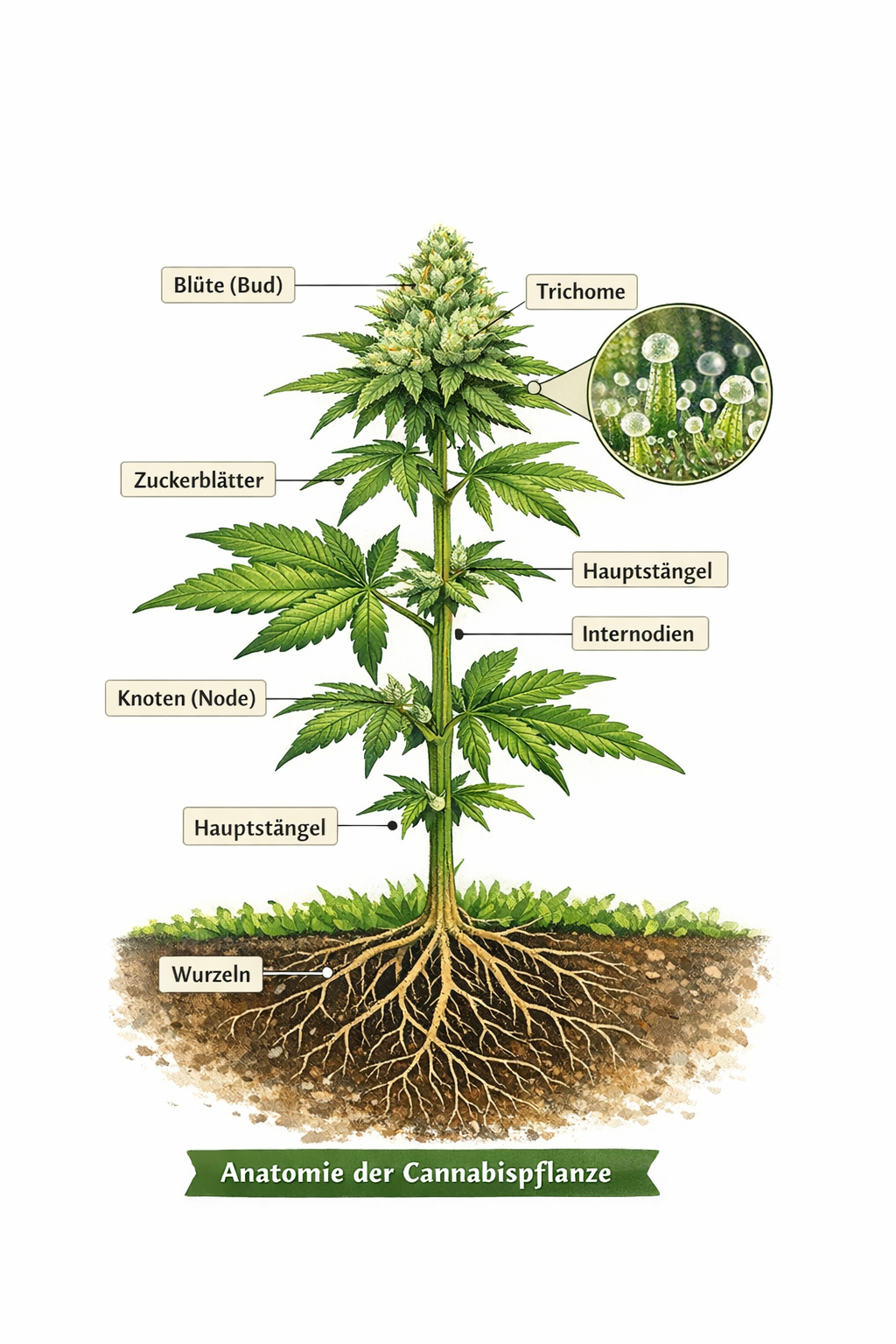
Regardless of strain or genetics, the cannabis plant consists of several central components that interlock:
- Root system
- Stem and internodes
- Leaves (fan and sugar leaves)
- Flowers (in female plants)
- Trichomes
The exact expression of these components varies depending on genetics, environmental conditions, and developmental phase.
The Root System: Foundation of the Plant
The roots are responsible for water uptake, nutrient transport, and stability. Especially in young plants and cuttings, a healthy root system is crucial as it influences the entire further development.
Cuttings must first develop their root system anew. Therefore, they are more sensitive to stress and benefit from stable conditions. If you are specifically dealing with cuttings, you can find an overview in the category THC Cuttings.
Stem and Internodes: Structure and Transport Routes
The main stem supports the plant and acts as a transport route for water, nutrients, and assimilates. Side shoots emerge at the nodes, while the distances between them are referred to as internodes.
The length of the internodes is genetically determined and is often used to differentiate strain types. Guidance on this can be found in this article: Sativa vs. Indica – What Really Matters.
Leaves: Photosynthesis and Energy Supply
Leaves are the energy centers of the cannabis plant. Through photosynthesis, they produce sugars needed for growth, root formation, and flower development. The main types are:
- Fan leaves: Large leaves with a high photosynthesis rate
- Sugar leaves: Smaller leaves near the flowers, often covered with trichomes
Excessive removal of leaves can disrupt the plant’s energy supply. When interventions are sensible and when they are not is explained in this article: Do You Need to Trim the Leaves of THC Cuttings?
Flowers: Reproductive Organs of the Female Plant
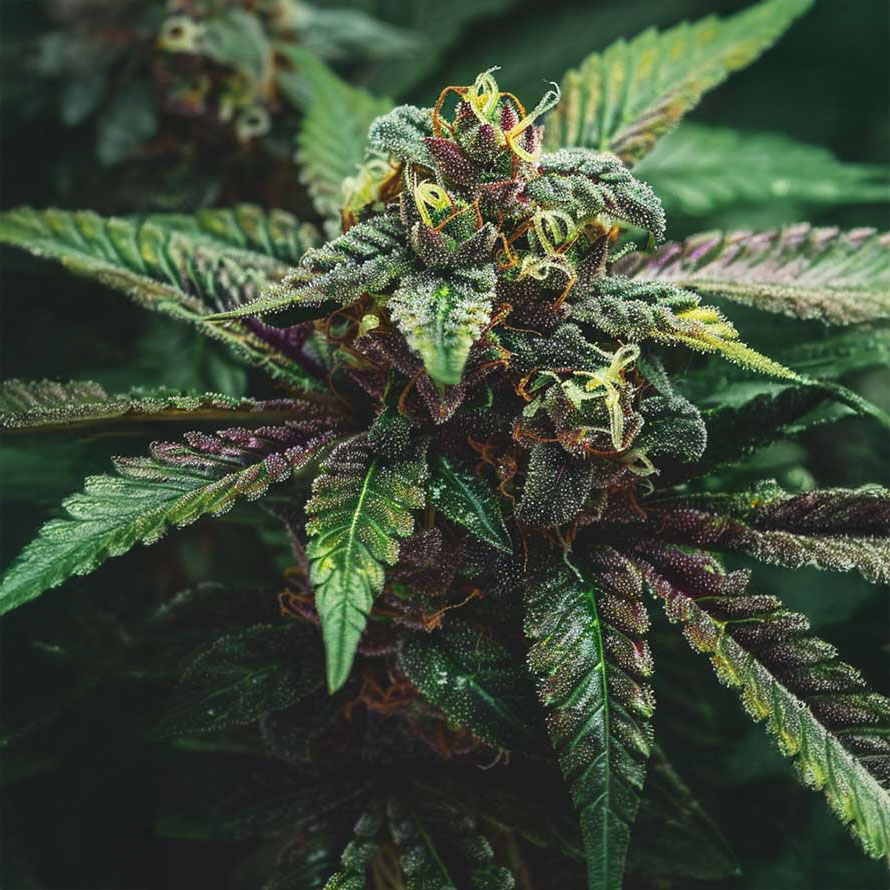
The flowers develop in female cannabis plants and are the part most often in focus. They consist of many small calyxes from which the visible flower hairs (pistils) emerge.
Flower development is closely linked to light cycle, genetics, and plant condition. Stress in early phases can be significantly noticeable here.
Trichomes: Protection, Aroma, and Compounds
Trichomes are microscopic resin glands primarily found on flowers and sugar leaves. They produce cannabinoids, terpenes, and flavonoids and serve the plant as protection against UV radiation and herbivores.
Form, density, and maturity of the trichomes are often used to assess the plant’s developmental stage.
Differences Between Male and Female Plants
While female plants develop flowers, male plants develop pollen sacs. These anatomical differences are crucial as pollination changes flower development. In many setups, female plants or cuttings are specifically used.
Why Anatomical Understanding Reduces Errors
Many typical problems arise because signals are misinterpreted—such as when leaf changes are not recognized as a response to root stress. Understanding the anatomy allows for better symptom assessment and calmer reactions.
Frequently Asked Questions About the Anatomy of the Cannabis Plant
Does the anatomy change during growth?
Yes. The plant goes through several developmental phases where priorities shift—from root and leaf growth to flower formation.
Does anatomy play a role in strain selection?
Definitely. Differences in growth form, leaf structure, and internode length affect space requirements, light use, and care effort.
Where can I find further fundamentals?
In-depth content on plant structure, genetics, and care can be found in the Cannabis Literature as well as answers to organizational questions in the FAQ.
What You Can Take Away from Plant Anatomy
The cannabis plant is a complex system where all parts work together. A basic understanding of anatomy helps you better categorize developmental processes, identify stress sources, and support healthier plants in the long term.

About the Author – Hannah
Hannah focuses on researching, contextualizing, and observing current developments in plant care and modern cultivation techniques. Her focus lies on new methods, optimizing growth conditions, and making complex topics accessible. Her content complements practical experience with analysis, updates, and a keen eye on emerging trends.
Content is regularly reviewed and updated.
More about the team behind LeafConnect