HLVD: Behandlung gibt es kaum – Prävention ist der Schlüssel bei Cannabis-Stecklingen
HLVD (Hop Latent Viroid) gehört zu den größten Risiken im Stecklingsbereich, weil es sich unbemerkt ausbreiten kann und Pflanzen langfristig schwächt. Wichtig ist dabei: HLVD ist ein Viroid (kein klassisches Virus) – und genau deshalb steht nicht „Heilung“, sondern Früherkennung und konsequente Prävention im Mittelpunkt.

Warum HLVD für Stecklinge besonders kritisch ist
Stecklinge werden oft in Chargen produziert, geschnitten, sortiert und verpackt. Wenn dabei eine Mutterpflanze oder ein Arbeitsschritt kontaminiert ist, kann sich HLVD schnell auf viele Pflanzen übertragen. Typische Folgen sind verlangsamtes Wachstum, geringere Vitalität und eine insgesamt schwächere Entwicklung.
Da HLVD lange symptomlos bleiben kann, reicht eine rein optische Kontrolle nicht aus. Ein strukturierter Umgang mit Qualität und Herkunft ist deshalb entscheidend – besonders beim Kauf von THC Stecklingen.
Die wichtigsten Präventionsmaßnahmen im Überblick
1) Regelmäßige Labortests (Screening pro Charge)
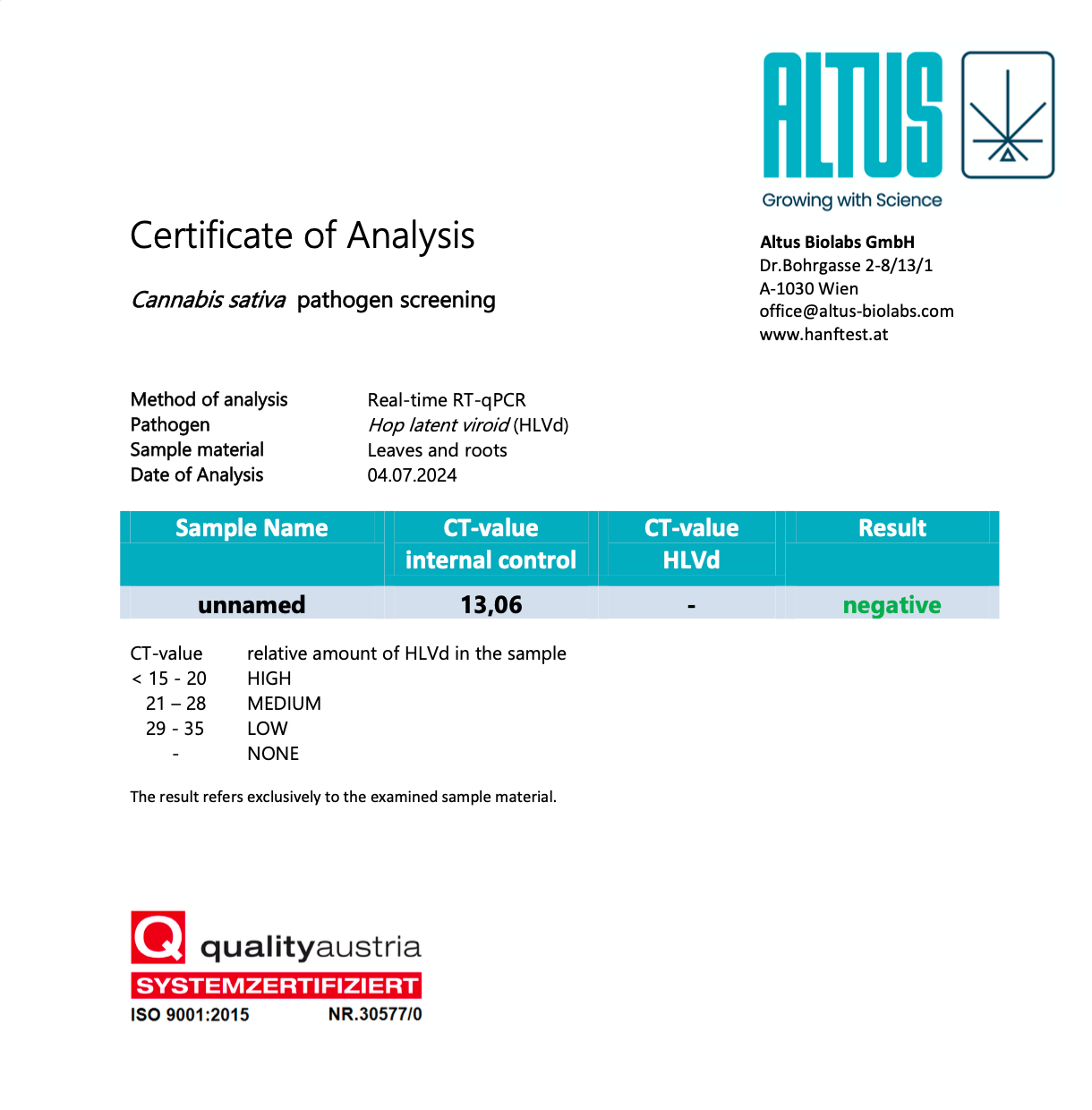
Der zuverlässigste Schutz vor HLVD ist systematisches Testen. Seriöse Anbieter lassen ihre Bestände in spezialisierten Laboren prüfen und dokumentieren die Ergebnisse als Analysezertifikat. Gerade bei neuen Genetiken oder größeren Chargen ist diese Transparenz entscheidend.
2) Strikte Hygiene bei jedem Arbeitsschritt
HLVD wird hauptsächlich mechanisch übertragen – also über direkten Kontakt. Daher ist konsequente Hygiene kein Zusatz, sondern Grundvoraussetzung:
- Werkzeuge zwischen Pflanzen desinfizieren,
- Einmalhandschuhe regelmäßig wechseln,
- Arbeitsbereiche sauber trennen und reinigen.
Diese Maßnahmen reduzieren das Risiko einer Kreuzkontamination erheblich.
3) Schimmelprävention klar abgrenzen
Maßnahmen wie eine Schwefelbehandlung vor dem Versand können helfen, Schimmelbildung zu reduzieren. Wichtig ist jedoch die klare Abgrenzung: Schimmelprävention ersetzt keine HLVD-Tests und ist keine Behandlung des Viroids.
4) Blattmanagement mit Augenmaß
Das gezielte Reduzieren von Blattmasse kann in bestimmten Situationen sinnvoll sein, um Verdunstung und Luftzirkulation zu steuern. Entscheidend ist, dass dies stressarm erfolgt. Mehr dazu findest du hier: Muss man Blätter bei THC-Stecklingen schneiden?
Was du als Käufer selbst prüfen kannst
Neben offiziellen Testergebnissen lohnt sich ein genauer Blick auf den Zustand der Pflanzen bei Ankunft: Blätter, Stängel und Ansatzstellen sollten vital wirken, die Verpackung stabil und sauber sein. Eine hilfreiche Orientierung bietet dir dieser Leitfaden:
Wie man hochwertige Hanfstecklinge findet
Für eine umfassende Anleitung von der Lieferung bis zur Ernte empfiehlt sich zusätzlich: Cannabis Stecklinge erfolgreich anbauen – der Leitfaden
FAQ zu HLVD, Tests und Prävention
Kann man HLVD behandeln oder heilen?
Eine gezielte Heilung ist in der Praxis nicht vorgesehen. Der Fokus liegt auf Prävention, Früherkennung und konsequenter Hygiene, um eine Ausbreitung zu verhindern.
Warum sind Tests wichtig, obwohl Pflanzen gesund aussehen?
HLVD kann lange symptomlos bleiben. Deshalb sind Labortests notwendig, um Risiken frühzeitig zu erkennen.
Wo finde ich Antworten zu Versand, Bestellung und Ablauf?
Viele organisatorische Fragen werden in den FAQ beantwortet.
Zusammenfassung
HLVD stellt ein ernstzunehmendes Risiko für Cannabis-Stecklinge dar. Durch regelmäßige Tests, klare Hygieneprozesse und transparente Qualitätsstandards lässt sich dieses Risiko jedoch deutlich reduzieren. Wer zusätzlich auf seriöse Anbieter und sauberes Handling achtet, schafft die beste Grundlage für gesunde Pflanzen und stabile Ergebnisse.
Vertiefende Hintergründe zu Anbau, Sorten und Grundlagen findest du außerdem in unserer Cannabis-Literatur.
Über den Autor – Ben
Ben beschäftigt sich seit mehreren Jahren intensiv mit der Aufzucht und Pflege von Stecklingen sowie der gesunden Entwicklung von Pflanzen in der Wachstumsphase. Sein Schwerpunkt liegt auf stressarmen Trainingsmethoden, stabilen Wachstumsbedingungen und der Vermeidung typischer Pflegefehler. Die Inhalte basieren auf praktischer Erfahrung, bewährten Methoden und realen Beobachtungen aus der täglichen Arbeit mit Jungpflanzen.
Fachliche Ergänzung & Aktualisierung: Hannah – Recherche, Einordnung aktueller Methoden
und Beobachtung neuer Entwicklungen.
Mehr über das Team hinter LeafConnect