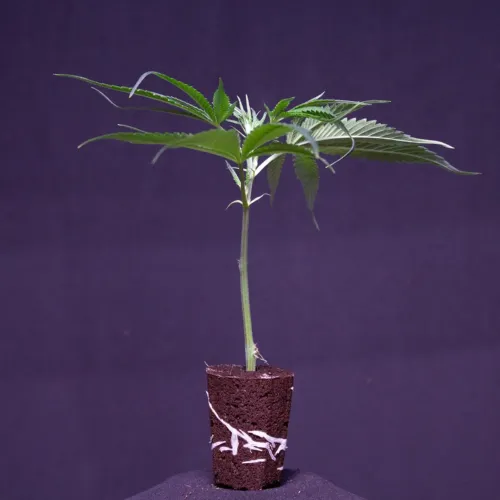
Ruderalis: The underestimated cannabis strain in the spotlight
Ruderalis: The underestimated cannabis strain in the spotlight
Introduction to Cannabis Ruderalis
What is Ruderalis?
Ruderalis is a wild subspecies of the cannabis plant that differs significantly from its more familiar relatives – Sativa and Indica. This robust plant grows predominantly in harsh climates such as Russia, Central Asia, and Eastern Europe. Its most distinctive characteristic: Ruderalis flowers regardless of the duration of light exposure, a phenomenon known as autoflowering .
This ability fundamentally distinguishes them from photoperiodic varieties, which rely on light cycles to initiate flowering. This very characteristic makes ruderalis particularly interesting for breeders and consumers alike.
Origin and history
Cannabis ruderalis was first described in the 1920s by the Russian botanist Janischewsky. He discovered this variety in regions with short summers and extreme temperature conditions where other cannabis varieties were barely able to survive.
Over the decades, ruderalis was primarily regarded as a wild plant. It only gained importance in breeding and commercial cultivation with the advent of autoflowering hybrids.
Differences between Indica and Sativa
The main differences between Indica and Sativa lie not only in appearance and growth, but also in chemical composition:
|
feature |
Ruderalis |
Indica |
Sativa |
|---|---|---|---|
|
Flowering behavior |
Autoflowering |
Light-dependent |
Light-dependent |
|
Size |
30–80 cm |
60–150 cm |
120–300 cm |
|
Effect |
Mild, relaxing |
Reassuring |
Stimulating |
|
THC content |
Low to medium |
High |
High |
|
CBD content |
High |
Medium |
Low to medium |
Ruderalis is therefore often used to create hybrids with certain desired characteristics – such as a short flowering time and high CBD content.
Botanical characteristics of Ruderalis
Size and growth pattern
Ruderalis is compact, bushy, and often only grows to a height of 80 cm. Its small size makes it ideal for discreet cultivation – for example, on balconies or in small indoor tents.
It has a short lifespan: it begins to bloom after just 3-4 weeks, regardless of the light. This makes it particularly attractive for beginners who want to see quick results.
Flowering behavior (autoflowering)
The autoflowering behavior is the most outstanding characteristic of ruderalis. The plant flowers automatically after a certain period of time – usually 21 to 30 days after germination – and does not require a change in the light cycle.
This trait has been deliberately bred into modern hybrids, resulting in varieties such as “Auto Amnesia” or “Auto White Widow” – powerful plants with short harvest cycles.
Adaptability to extreme conditions
Ruderalis has thrived in harsh climates and exhibits remarkable resistance to pests, mold, and cold. This robustness makes it extremely popular for outdoor growing under adverse conditions.
Genetics and crosses with Ruderalis
Hybrids with Sativa and Indica
Ruderalis’ genetic stability and autoflowering trait make it a valuable component of modern cannabis breeding. Breeders often combine Ruderalis with Sativa and Indica strains to unite the best of both worlds.
-
Sativa x Ruderalis : Resulting in an autoflowering plant with creative and energetic effects.
-
Indica x Ruderalis : Produces robust, fast-flowering plants with a relaxing effect.
These hybrids are mostly feminized and suitable for both beginners and professionals. They deliver solid yields with minimal effort.
Popular autoflowering strains
Some of the most popular autoflowering strains with Ruderalis genetics are:
-
Northern Lights Auto – known for its calming effect
-
Blueberry Auto – fruity taste and high resin production
-
Amnesia Haze Auto – strong Sativa influence with ruderal flowering.
Such hybrids offer new avenues for medical and recreational consumers seeking simple and high-yielding plants.
Ruderalis in cultivation
Indoor vs. Outdoor Cultivation
Thanks to its compact structure, Ruderalis is ideal for indoor cultivation in small grow tents or cabinets. Cultivation is discreet, space-saving, and less energy-intensive, as strict light control is not necessary.
Outdoors , Ruderalis develops its full resistance to cold and pests. It can also grow without problems in more northerly climates – even with short summer periods.
Optimal environmental conditions
Despite its robustness, Ruderalis thrives best under the following conditions:
-
Humidity : 40–60%
-
Temperature : 20–26 °C
-
Light : 18 hours of light daily (not absolutely necessary)
-
Soil : Loose, well-drained, slightly acidic (pH 6.0–6.5)
One advantage: Ruderalis is not sensitive to minor cultivation errors – a clear plus for beginners.
Care and yield
Ruderalis requires minimal care. Since it automatically switches to the flowering stage, there’s no need to manually adjust the lighting. Its short lifespan of approximately 8–10 weeks from germination to harvest allows for several cycles per year.
The yield ranges from 20–100 g per plant (indoors) and up to 200 g outdoors – depending on the variety, conditions and experience.
Medical uses of Ruderalis
CBD content and therapeutic properties
Ruderalis naturally contains high amounts of cannabidiol (CBD) , a non-psychoactive compound valued for numerous medical applications:
-
Anti-inflammatory
-
anxiety-relieving
-
Muscle relaxant
-
Antiepileptic
These properties make Ruderalis an attractive choice for patients who want to enjoy the health benefits of cannabis without the intoxicating effects.
Preferred applications in medicine
Medicinal varieties based on Ruderalis are frequently used for the following conditions:
-
Chronic pain
-
Anxiety disorders
-
epilepsy
-
multiple sclerosis
-
Loss of appetite
Many of these varieties are available in Germany through pharmacies or by home cultivation with a prescription.
Ruderalis in cannabis culture
Importance for growers
For a long time, Ruderalis was ridiculed by the cannabis community – as “useless” or “too weak”. But with advances in genetics, the tide has turned: Ruderalis-based strains offer robust, fast-maturing plants for hobby gardeners and commercial growers alike.
Perception and prejudice
Even today, some prejudices persist against Ruderalis, such as the claim that it contains “too little THC” or is “only suitable for beginners.” However, these assessments ignore the enormous breeding potential and therapeutic benefits of this subspecies.
Future developments and trends
Genetic research
Ruderalis is increasingly gaining a firm foothold in modern cannabis breeding. Scientists are investigating the genetic basis of this autoflowering trait in order to integrate it specifically and efficiently into other cannabis varieties.
Research objectives include:
-
Stabilization of Ruderalis genetics in hybrids
-
Increasing THC content through targeted crossbreeding
-
Improvement of pest resistance
The combination of genetic robustness and short lifespan makes Ruderalis particularly valuable for innovative breeding projects.
Potential for new medical applications
Because Ruderalis has a higher CBD and lower THC content, researchers see great potential for the development of specialized, medically effective cannabis strains . These could be used specifically for neurological diseases, chronic pain, and inflammatory processes.
Especially in Europe, where the medical use of cannabis is growing rapidly, Ruderalis hybrids could soon play a central role.
Legal aspects surrounding Ruderalis
Legal situation in Germany and Europe
In Germany, Ruderalis is subject to the same regulations as all other cannabis strains. Even though it often contains less THC, it is considered part of the Cannabis genus and therefore requires a permit.
Key points:
-
Medical use is permitted (with a prescription).
-
Cultivation for research purposes requires a special permit.
-
Private cultivation is currently (as of 2025) only permitted in certain cases.
There are significant differences in legislation across Europe. Countries like Spain and Switzerland have a more liberal approach to ruderalis, while other countries maintain strict bans.
Breeding and seed trade
Trading in Ruderalis seeds is legal in Germany as long as they are not intended for cultivation . Many European seed banks offer feminized autoflowering varieties containing Ruderalis, which have been bred for medicinal purposes.
However, caution is advised when purchasing: The declaration “for collectors’ purposes only” does not protect against criminal consequences for cultivation without authorization.
Common myths and misconceptions about Ruderalis
Myth: No potency
A common misconception is that Ruderalis “doesn’t get you high”. While it naturally contains less THC, modern hybrids exhibit considerable potency – many reach over 20% THC and combine this with high CBD content.
Myth: Only for beginners
Although Ruderalis is considered beginner-friendly, professionals also benefit from its advantages:
-
Faster harvest cycles
-
Less maintenance required
-
Ideal for micro-grows or discreet projects
Many commercial growers are now specifically focusing on autoflowering Ruderalis varieties to increase efficiency.
Comparison: Ruderalis vs. Sativa vs. Indica
|
feature |
Ruderalis |
Indica |
Sativa |
|---|---|---|---|
|
Flowering time |
7–10 weeks |
8–10 weeks |
10–16 weeks |
|
Start of flowering |
Automatically |
Photoperiodic |
Photoperiodic |
|
Effect |
Mild, functional |
Physically calming |
Mentally stimulating |
|
Ideal for |
Beginner, Medical |
Evening, relaxation |
During the day, creativity |
|
Resilience |
High |
Medium |
Small amount |
|
Space requirements |
Small amount |
Medium |
High |
This table illustrates that Ruderalis is not inferior – just different. Its unique growth pattern makes it an ideal choice for certain growing scenarios.
Buying advice: Selecting Ruderalis seeds
What should you look out for when buying?
When buying Ruderalis or autoflowering seeds, the following aspects should be considered:
-
Reputability of the provider (e.g., European seed banks)
-
THC/CBD ratio
-
Flowering period and yield
-
Feminized or regular
Recommendation: Always choose feminized autoflowering seeds to avoid male plants in the grow.
Recommended varieties for beginners and professionals
-
For beginners :
-
Easy Bud Auto
-
Quick One
-
-
For advanced users :
-
Royal Gorilla Car
-
AK-47 car
-
-
For medical use :
-
CBD Auto Charlotte’s Angel
-
CBD Auto Compassion Lime
-
These varieties combine ease of use with good efficacy and reliable performance.
Conclusion: Why Ruderalis deserves more attention
Ruderalis is much more than just a minor player in the cannabis universe. Its unique characteristics – especially its autoflowering flowering behavior – make it an indispensable tool for modern breeding and medical applications.
Whether for novice growers, patients or experienced breeders: Understanding Ruderalis broadens one’s perspective on the diversity and possibilities of cannabis.
FAQ about Ruderalis
1. Is Ruderalis legal in Germany?
Ruderalis is subject to the same laws as other cannabis strains. Cultivation is only permitted with a permit.
2. Does Ruderalis get you high?
Pure Ruderalis contains little THC, but modern hybrids with Ruderalis content can be very potent.
3. What does autoflowering mean?
The plant automatically begins to flower, regardless of the light cycle.
4. How long does cultivation take?
Autoflowering varieties usually take 8–10 weeks from germination to harvest.
5. Is Ruderalis suitable for beginners?
Yes, it is easy to care for, robust and does not require any change in lighting.
6. Are there medicinal varieties of Ruderalis?
Yes, many autoflowering strains with high CBD content are based on Ruderalis genetics.